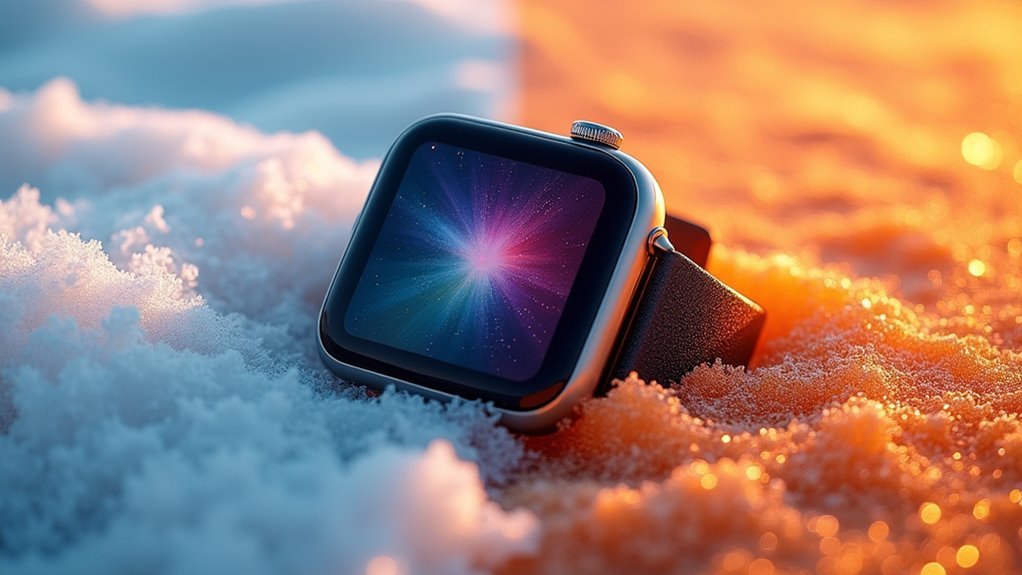
Your smartwatch display faces significant challenges in temperature extremes, with performance dropping when temperatures exceed 104°F or fall below 32°F. In hot conditions, you’ll notice automatic dimming, color shifting, and reduced touch responsiveness as thermal management systems activate to prevent damage. Cold weather slows pixel response times, decreases brightness, and can cause condensation issues that impair visibility. OLED displays generally handle cold better than heat, while LCDs struggle with contrast in both extremes, though protective technologies can help mitigate these effects.
How Temperature Extremes Affect Smartwatch Display Performance
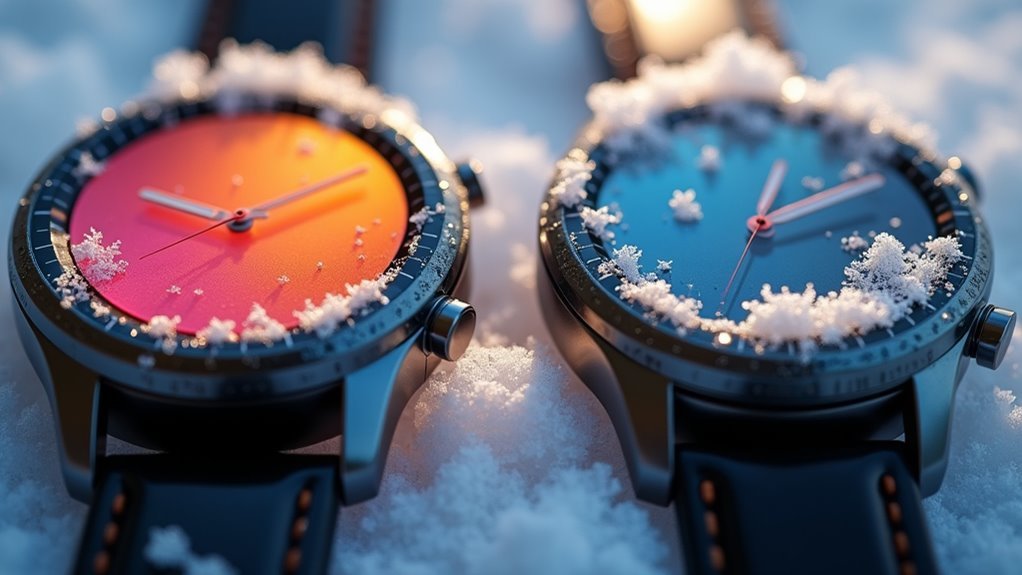
When you expose your smartwatch to extreme temperatures, the display performance suffers in ways you’ll immediately notice.
Cold weather reduces your OLED display’s refresh rates and slows pixel response, making animations appear choppy. Your touchscreen becomes less responsive until it warms up, frustrating basic interactions like swiping and tapping.
Heat poses different threats to your display. High temperatures accelerate chemical aging in display materials, causing permanent degradation over time.
You’ll notice your screen dimming, discoloring, or becoming completely unresponsive when temperatures exceed manufacturer recommendations. Most smartwatches operate efficiently between 0° to 35°C (32° to 95°F).
Extreme temperature swings create condensation inside your watch casing, damaging sensitive display components.
Your device’s thermal sensors trigger protective throttling, reducing frame rates to prevent overheating damage. Prolonged skin contact during high-power operations can create additional thermal discomfort for users.
LCD Screen Behavior in Hot and Cold Weather Conditions
LCD displays in smartwatches face their own unique set of temperature-related challenges that differ from OLED technology.
When you’re exposed to hot weather, your LCD smartwatch screen will exhibit reduced brightness and contrast, making it harder to read. The backlight generates additional internal heat, worsening the overheating effects and potentially causing dark spots or permanent damage to internal components.
In cold conditions, you’ll notice considerably slower response times as the liquid crystals become more viscous. Your touch screen may become less responsive, and you’ll experience decreased contrast and brightness that impacts visual clarity. Cold temperatures can also lead to “ghosting” where previous images remain faintly visible on the display.
While standard LCDs operate between 0°C and 50°C, specialized models designed for extreme temperatures can function from -30°C to +80°C, offering better performance for outdoor enthusiasts.
OLED Display Response to Temperature Variations
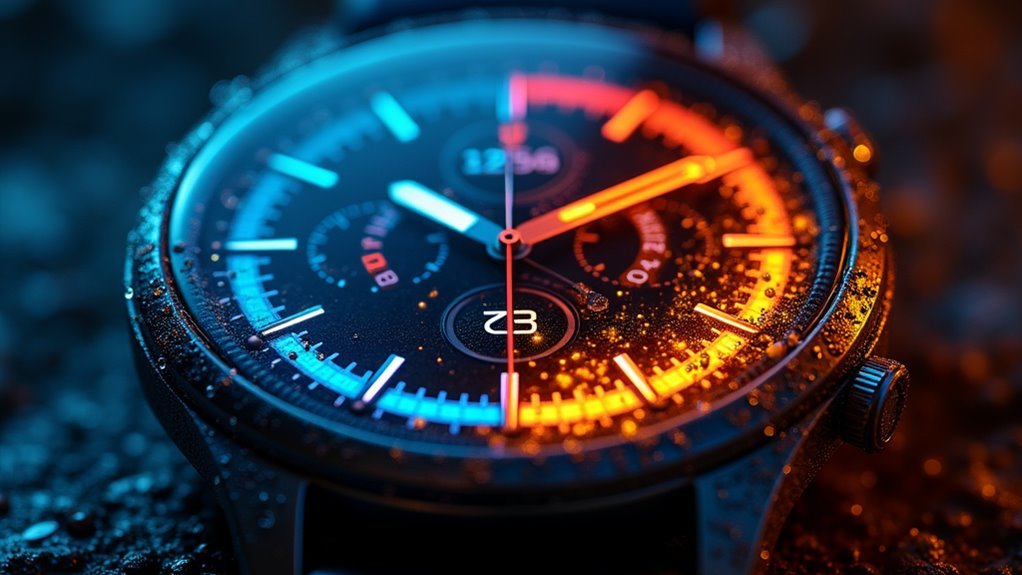
You’ll notice OLED displays handle temperature extremes differently than LCD screens, with their own unique performance patterns.
When temperatures drop below -10°C, your smartwatch will likely enter a low-temperature mode that restricts advanced functions and reduces screen brightness to preserve the display. However, high-quality OLED displays can maintain functionality even at extreme temperatures, with some operating reliably down to -40℃.
On the flip side, excessive heat can force your OLED screen to limit its refresh rate and peak brightness levels to prevent component degradation.
Cold Weather Performance Issues
Although OLED displays in smartwatches demonstrate impressive resilience across various environmental conditions, cold weather presents unique challenges that can affect your device’s screen performance.
You’ll notice reduced brightness as voltage efficiency decreases in frigid temperatures, though most displays maintain functionality down to -20°C, with some models operating to -40°C.
Cold conditions slightly increase power consumption as your smartwatch works harder to maintain brightness and responsiveness.
Fortunately, OLED technology’s fast response times remain largely unaffected by temperature drops.
However, prolonged exposure to extreme cold can cause material degradation over time. The energy-efficient design of AMOLED displays in wearables helps minimize battery drain during temperature fluctuations.
The display driver IC’s quality markedly influences how well your smartwatch handles temperature variations, making manufacturer choice vital for cold-weather performance.
Heat-Induced Refresh Rate Changes
While cold temperatures primarily affect brightness and power consumption, heat presents different challenges for your smartwatch’s OLED display performance.
Your OLED display typically operates within -30°C to +70°C, but excessive heat can cause visual artifacts and temporary lag rather than dramatic refresh rate drops. You’ll notice the refresh rate itself remains relatively stable within manufacturer specifications, though your device’s processor may throttle first, affecting overall responsiveness.
Heat-induced issues manifest as color shifting, brightness inconsistency, or ghosting effects above 50-60°C. Your smartwatch’s firmware will likely activate thermal management before display failure occurs, including brightness limiting or low-power modes.
Since extensive industry data on heat-specific refresh rate changes remains limited, manufacturers focus more on temperature compliance than detailed performance metrics under extreme conditions. When shopping for replacement smartwatches, many users turn to platforms offering affordable pricing to find temperature-resistant models.
Screen Brightness and Visibility Challenges in Extreme Heat
When temperatures soar, your smartwatch screen faces a perfect storm of visibility challenges that can render even the brightest displays nearly unreadable.
Heat triggers thermal management systems that automatically dim your screen to prevent overheating, overriding your manual brightness settings. Direct sunlight amplifies this problem by creating glare and washout effects that make navigation nearly impossible.
Your watch’s advertised peak brightness of 2,000 nits won’t matter when thermal protocols kick in. The combination of reduced brightness and increased reflections creates a frustrating experience during outdoor activities. OLED displays suffer particularly as blue drive levels increase power consumption and heat generation during peak brightness demands.
- Your automatic brightness settings become useless as thermal limits override user preferences
- Screen reflections become more prominent, further decreasing perceived visibility
- Color shifting and fading occur as internal temperatures rise rapidly
Cold Weather Impact on Display Responsiveness and Clarity
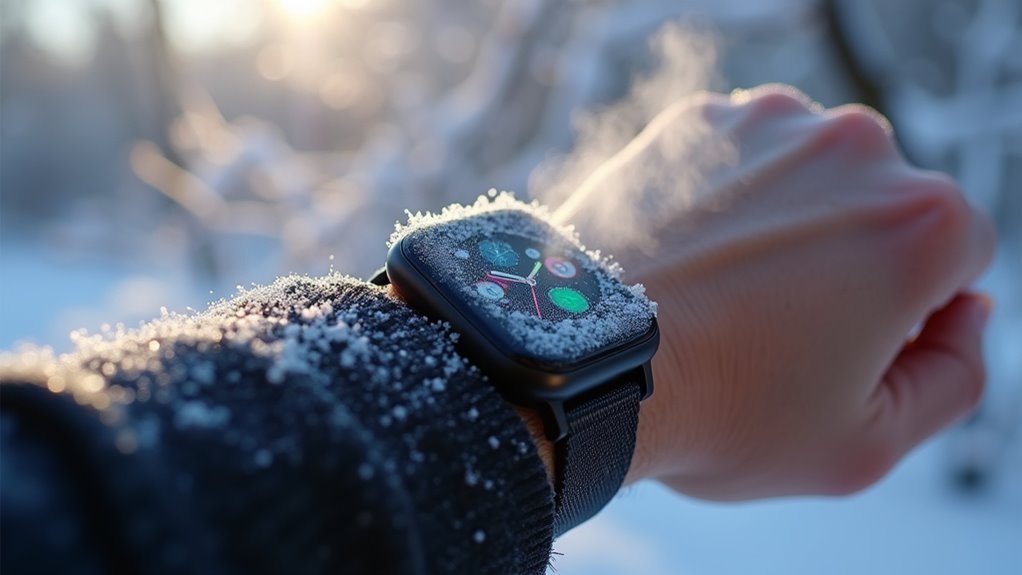
Cold temperatures create an entirely different set of display challenges that can leave you struggling with sluggish touch responses and degraded screen clarity.
Your smartwatch’s display materials, whether glass or plastic, contract in cold conditions, directly impacting touch accuracy and responsiveness. You’ll notice condensation forming on the screen, reducing visibility and making navigation difficult.
Cold weather causes smartwatch display materials to contract, reducing touch sensitivity while condensation buildup makes screen navigation increasingly challenging.
Cold weather also diminishes your battery’s efficiency, indirectly affecting display performance. The electronic components powering your screen become less reliable in freezing temperatures, potentially causing delayed responses or erratic behavior. Models like the Garmin Instinct Solar feature solar charging to help maintain power levels even when traditional battery performance suffers in cold conditions.
However, you’re not completely helpless—premium models like the Apple Watch Ultra and Galaxy Watch Ultra are specifically engineered for extreme conditions.
These devices feature optimized displays with superior materials and anti-reflective coatings that maintain clarity and responsiveness even when temperatures drop considerably.
Thermal Management Systems for Display Protection
Beyond the visible effects of temperature extremes, your smartwatch employs sophisticated thermal management systems that work behind the scenes to protect its display from heat-induced damage.
These systems use multiple heat dissipation modes—conduction, radiation, and convection—to maintain safe operating temperatures and prevent burns that could occur when surface temperatures exceed safety standards.
Your device’s thermal protection includes:
- Heat spreaders made from graphite and metal films like copper or aluminum that distribute heat evenly across the display
- High-conductivity pathways that quickly transfer heat away from processors, displays, and batteries before it affects performance
- Advanced cooling technologies including phase change materials and thermoelectric devices that actively regulate temperature
Phase change materials can minimize peak temperature rises by up to 85%, providing exceptional thermal buffering for your smartwatch display during extreme heat exposure.
This integrated approach guarantees your display maintains ideal clarity and responsiveness while meeting ergonomic safety standards.
Rugged Smartwatch Displays Built for Temperature Extremes
While consumer smartwatches struggle in harsh conditions, rugged models like the Amazfit T-Rex 3 thrive where others fail, operating reliably across temperature ranges from -22°F to 158°F.
You’ll appreciate the 1.5-inch AMOLED display delivering 2,000 nits peak brightness, ensuring you can read your screen even in blazing sunlight. The sharp 480×480 resolution maintains visual clarity during demanding outdoor activities.
These displays undergo military-grade testing and feature shock-resistant construction with durable materials like stainless steel bezels. You’re protected against impacts, drops, and even salt spray corrosion.
The sealed design keeps water and dust out while maintaining functionality 328 feet underwater. With over three weeks of battery life, you won’t worry about frequent recharging during extended adventures in extreme environments. The night display feature provides specialized illumination in red, green, or orange colors for optimal visibility in dark environments.
Display Technology Comparison Under Harsh Environmental Conditions
When you’re choosing a rugged smartwatch, you’ll find that display technology makes an essential difference in extreme conditions.
OLED screens deliver superior brightness and image quality but struggle more than LCDs in freezing temperatures where organic materials slow down and become prone to burn-in.
You’ll need to weigh these performance trade-offs against your specific environmental demands, as each technology responds differently to temperature extremes and impacts your watch’s overall durability. Reflective displays utilize ambient light for visibility without significant power drain, making them highly effective in bright outdoor conditions where traditional displays often become unreadable.
LCD Vs OLED Performance
As smartwatch users push their devices through demanding outdoor activities and varying light conditions, the fundamental differences between LCD and OLED display technologies become critical performance factors.
You’ll find that LCDs generally deliver superior brightness, making them more readable in direct sunlight, while OLEDs excel with deeper blacks and higher contrast ratios that enhance visibility in low-light conditions.
When you’re evaluating performance across environments, consider these key differences:
- Power efficiency: OLEDs consume less power in dark modes, while LCDs maintain consistent energy usage regardless of content.
- Viewing angles: OLEDs maintain color accuracy at wider angles compared to LCDs’ narrower viewing range.
- Durability: LCDs resist burn-in better, though OLEDs offer superior color saturation and contrast.
Your choice depends on your primary usage patterns and environmental demands. The ultra-thin design of OLED displays also makes them particularly suitable for sleek smartwatch form factors that don’t compromise on portability.
Temperature Impact Analysis
Beyond the fundamental performance differences between LCD and OLED technologies, extreme temperatures create additional challenges that can make or break your smartwatch’s reliability in harsh conditions.
In blazing heat, your LCD panel may experience thermal expansion leading to cracking or fogging, while plastic polymer screens soften and lose touch sensitivity.
Cold weather brings different problems—LCD panels slow their response and risk pixel damage below freezing, though OLED screens maintain better function despite potential dimming.
You’ll notice reduced touch sensitivity as capacitive technology struggles in cold conditions.
However, sapphire crystal displays retain clarity and scratch resistance across temperature extremes, which explains why military-grade watches rely on this material for desert operations and Arctic expeditions favor reinforced screens for durability. Premium models like the Samsung Galaxy Watch 7 feature sapphire crystal glass construction that enhances both visual clarity and thermal stability in challenging environments.
Rugged Display Technologies
While temperature extremes test your smartwatch’s basic functionality, the materials protecting that delicate screen determine whether your device survives real-world punishment or becomes an expensive paperweight.
The display technology you choose makes all the difference when facing harsh environmental conditions.
Premium rugged smartwatches utilize several advanced technologies to withstand extreme environments:
- Sapphire crystal glass provides superior scratch resistance compared to standard glass, making it ideal for high-end models like the Apple Watch Ultra 2.
- AMOLED displays with 2,000+ nits brightness guarantee you’ll see your screen clearly even in blazing sunlight or snow glare.
- Dual-layer display systems found in TicWatch Pro series enhance both battery life and visibility under challenging conditions.
These technologies work together, creating displays that won’t fail when you need them most. For extreme conditions, some smartwatches feature displays with 3,000 nits peak brightness that ensure visibility even in the harshest outdoor environments.
Protecting Your Smartwatch Screen From Temperature Damage
Although smartwatches are designed to withstand daily wear, temperature extremes can greatly damage their screens and internal components.
You’ll want to protect your device from direct sunlight and avoid leaving it in hot cars, as excessive heat can cause display dimming and malfunction. Cold temperatures reduce battery efficiency and affect screen clarity.
Use breathable protective cases and heat-resistant silicone or woven nylon bands to maintain peak performance.
Screen protectors like IQShield LiQuidSkin offer additional protection against impacts and scratches.
Store your smartwatch in cool, shaded areas when not in use, and clean it regularly to prevent dust buildup that traps heat. After swimming or intense workouts, rinse thoroughly with fresh water to prevent corrosion from salt and chemicals that can damage the screen over time.
Pay attention to temperature alerts, such as red thermometer icons, and take immediate corrective action to preserve your device’s lifespan.
Frequently Asked Questions
Can Extreme Temperatures Permanently Damage My Smartwatch Screen’s Touch Sensitivity?
Extreme heat can damage your smartwatch’s internal components through overheating, while extreme cold rarely causes permanent touch sensitivity damage but may create temporary unresponsiveness and increase screen brittleness over time.
Do Screen Protectors Affect Thermal Performance in Hot or Cold Weather?
Screen protectors don’t notably affect your smartwatch’s thermal performance in extreme temperatures. Materials may expand or contract slightly, but they’re designed to maintain functionality without impeding heat dissipation or device performance.
How Long Does It Take for Displays to Recover Normal Function After Temperature Exposure?
You’ll typically wait several minutes to hours for your display to recover normal function after temperature exposure, depending on how extreme the conditions were and your device’s thermal management capabilities.
Are There Specific Temperature Thresholds That Void Smartwatch Display Warranties?
You’ll void your warranty if you expose your smartwatch to temperatures exceeding 113°F (45°C) or below -4°F (-20°C), as manufacturers exclude environmental damage from coverage.
Can Rapid Temperature Changes Cause More Damage Than Gradual Extreme Exposure?
You’ll experience more damage from rapid temperature changes than gradual exposure. Quick shifts create thermal stress, microcracks, and condensation between screen layers, while gradual changes allow materials to adapt naturally.
In Summary
You’ve learned how temperature extremes can seriously impact your smartwatch’s display performance. Whether you’re facing scorching heat or freezing cold, you’ll want to choose a device with proper thermal management and rugged construction. Don’t let extreme weather catch you off guard – invest in a smartwatch that’s built to handle whatever conditions you’ll encounter. Your display’s reliability depends on making the right choice for your environment.