You’ll get more accurate sports tracking by choosing wearables with high-frequency sensors (1,000-1,600 Hz) and proper calibration for your specific sport. Consider that optical heart rate sensors can show 20% error rates, especially on darker skin tones, while GPS sampling rates of 10-15 Hz improve distance accuracy. Don’t rely on single devices for energy expenditure since most underestimate by 27-93%. Regular firmware updates and cross-referencing multiple data sources will greatly enhance your tracking precision and training insights.
Choose High-Frequency Sensor Devices for Enhanced Movement Detection
When selecting sports tracking wearables, you’ll want to prioritize devices equipped with high-frequency sensors that capture rapid movements with precision.
Look for devices with sampling rates between 1,000 Hz to 1,600 Hz, which provide detailed analysis of high-speed movements like sprinting and jumping. These fast sampling rates guarantee you won’t miss critical movement data during intense athletic activities.
Choose wearables featuring piezo-electric tri-axial accelerometers that can capture high accelerations up to 200 g. This technology enables precise detection of velocity cutting, turning maneuvers, and jumping mechanics.
Multi-sensor wearables combining accelerometers with GPS trackers offer thorough spatial-temporal data, though GPS may be less effective in environments with limited satellite visibility. High-frequency sampling improves data reliability and provides real-time feedback essential for immediate training adjustments. Additionally, many modern wearables include heart rate monitors that track cardiovascular performance continuously during training sessions.
Prioritize Heart Rate Accuracy When Selecting Your Wearable Device
Beyond capturing movement data with precision, heart rate accuracy forms the foundation of meaningful athletic performance insights from your wearable device. You’ll find commercial wearables show up to 20% measurement error, making device selection critical for reliable training data.
| Device Brand | Rest Accuracy | Exercise Performance | Key Strengths |
|---|---|---|---|
| Apple Watch | ~4.6 bpm error | Good correlation | Consistent rankings |
| Garmin | Low error rate | Performs well | Strong algorithms |
| Fitbit | Underestimates HR | Variable accuracy | Continuous updates |
| Pixel Watch 2 | Good baseline | r ~0.95 correlation | Dynamic activities |
| Generic PPG | Up to 14 bpm | Poor at high intensity | Budget option |
Choose devices with multiple sensor points and guarantee proper fit. Accuracy drops considerably during high-intensity exercise, particularly if you have atrial fibrillation. Only 11% of consumer wearables have been validated for at least one biometric outcome, highlighting the importance of selecting thoroughly tested devices.
Understand GPS Sampling Rate Impact on Distance and Speed Measurements
Your GPS sampling rate directly determines how accurately your wearable tracks distance and speed during workouts.
Higher sampling frequencies like 10Hz or 15Hz capture more data points per second, giving you considerably better precision than standard 1Hz or 5Hz rates.
You’ll need to balance this improved accuracy against faster battery drain, as higher frequencies require more processing power and energy consumption.
However, GPS units may significantly underestimate both total distance and speed when tracking short-distance, high-speed movements compared to more precise measurement systems.
GPS Frequency Affects Accuracy
Although most fitness enthusiasts don’t realize it, your GPS wearable’s sampling frequency directly determines how accurately it measures your distance and speed during workouts.
Higher sampling rates like 10 Hz capture more data points than standard 1 Hz units, reducing measurement errors especially during non-linear movements and direction changes.
Here’s how GPS frequency impacts your tracking accuracy:
- Distance Precision: Higher sampling rates improve linear distance tracking by recording more position fixes, with 10 Hz units showing coefficients of variation under 5% in research studies.
- Speed Calculations: Your device calculates speed from consecutive position fixes, so higher frequencies better capture rapid acceleration and deceleration during high-intensity activities. Professional teams now monitor these metrics alongside heart rate data to assess player fitness levels and predict potential injury risks.
- Movement Complexity: Non-linear movements like cutting and turning benefit more from increased sampling rates than straight-line running or cycling.
Higher Hz Improves Precision
GPS sampling rates work like camera frame rates – the more frequently your device captures position data, the smoother and more accurate your movement tracking becomes.
When you’re running or playing sports, higher Hz rates like 10-15 Hz capture considerably more data points per second than basic 1 Hz devices found in fitness trackers.
You’ll notice the biggest improvements in distance and speed measurements, especially during rapid direction changes common in team sports.
Higher sampling rates excel at capturing complex movement patterns that lower rates miss entirely. Professional-grade trackers undergo FIFA validation to ensure their accuracy meets the highest standards for competitive athletics.
However, be cautious with 15 Hz devices that rely on accelerometer supplements – they don’t always enhance reliability as expected.
For serious athletic tracking, you’ll want specialized sports devices with genuine higher sampling rates rather than consumer-grade alternatives.
Battery Vs Performance Tradeoffs
When selecting a GPS sampling rate for your sports wearable, you’ll face an inevitable tradeoff between tracking precision and battery longevity. Higher sampling rates like 10-15 Hz provide superior data accuracy but drain your device faster through increased satellite connections and processing demands.
You’ll need to balance your performance tracking needs against practical battery constraints, especially during extended training sessions or competitions.
Consider these strategies to optimize your device’s efficiency:
- Use adaptive sampling rates that automatically adjust based on your activity intensity and movement patterns.
- Enable lower power modes during less critical training phases while maintaining high precision for competitions.
- Activate selective sampling that increases frequency only during high-intensity intervals or specific movement phases.
Understanding this balance helps you make informed decisions about when to prioritize precision versus battery conservation. GPS units demonstrate reduced accuracy during short-distance, high-speed efforts, making it particularly important to consider when maximum precision is truly necessary.
Calibrate Your Device for Optimal Sport-Specific Performance
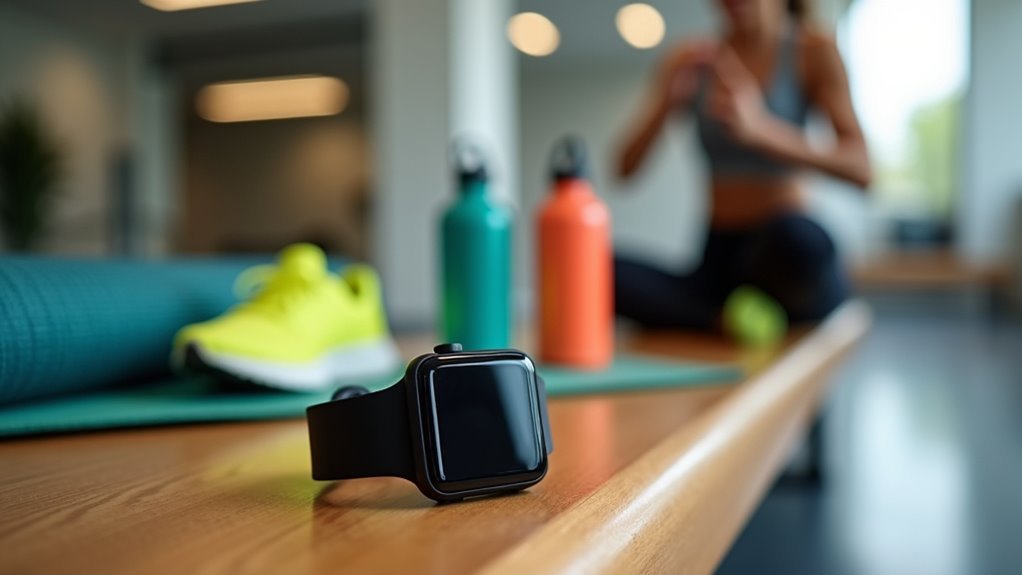
Sport-specific calibration transforms your wearable from a generic fitness tracker into a precision instrument that understands your athletic discipline’s unique demands.
You’ll need to wear your device continuously for at least seven days to establish baseline movement patterns, though ideal accuracy emerges after fourteen days of consistent use.
Continuous fourteen-day wear delivers optimal calibration accuracy, transforming your wearable into a precision athletic instrument tailored to your movement patterns.
During calibration, your accelerometer analyzes low-variance periods when you’re stationary, automatically estimating error coefficients. This process adjusts metrics like distance, pace, and energy expenditure to match your sport’s biomechanical profile—whether that’s tennis’s dynamic loading or running’s cadence variations.
Skip calibration, and you’ll face systematic measurement biases that compromise training decisions. Factory-calibrated sensors typically overestimate your actual physical activity levels, leading to inflated performance metrics.
Machine learning algorithms like Gaussian Process Regression excel with limited data, continuously refining accuracy as you train.
Consider Skin Tone Effects on Heart Rate Measurement Precision
Your skin tone can greatly impact how accurately your wearable device measures your heart rate during workouts.
Optical sensors in these devices rely on light absorption patterns that melanin in darker skin can disrupt, potentially leading to less precise readings especially during high-intensity exercise.
You’ll want to understand these limitations and explore calibration options to guarantee you’re getting the most reliable data for your training sessions. Research shows that 40% of studies indicated significant accuracy reduction in heart rate measurement for individuals with darker skin tones.
Skin Tone Accuracy Impact
Although wearable fitness trackers have revolutionized health monitoring, your skin tone can greatly impact the accuracy of heart rate measurements. Melanin in darker skin can interfere with light absorption, causing your device to record fewer data points and potentially inaccurate readings.
Studies show approximately 40% found significant accuracy reductions for darker-skinned participants, primarily because algorithms are often developed using data from lighter-skinned populations. Research analyzing 469 participants across multiple studies confirms these accuracy disparities exist across various wearable device brands.
Understanding these limitations helps you make informed decisions about your fitness data:
- Compare readings with ECG-based devices when possible to verify accuracy during workouts
- Be aware that rhythm detection may also be affected, potentially missing arrhythmia alerts
- Consider your Fitzpatrick skin tone score (1-6 scale) when interpreting device reliability for medical purposes
Optical Sensor Technology Limitations
These accuracy challenges stem from fundamental limitations in optical sensor technology itself. Your wearable’s optical sensors detect heart rate by emitting light and measuring what’s absorbed or reflected by blood vessels.
However, melanin in darker skin absorbs more light, reducing reflected signals and creating weaker photoplethysmography readings. This decreased signal-to-noise ratio complicates heartbeat detection algorithms that weren’t calibrated on diverse skin tone datasets.
You’ll also encounter energy efficiency trade-offs. Higher light intensity improves signal detection in darker skin but drains your battery faster.
Motion artifacts disproportionately impact measurement precision when combined with already-weakened optical signals. Your device’s miniaturized sensors must balance sufficient illumination with power consumption, limiting continuous operation time while maintaining data quality across different skin pigmentations. These challenges highlight why personalized devices are crucial for optimizing performance and ensuring accurate measurements for individual athletes with varying physiological characteristics.
Device Calibration Solutions
While manufacturers increasingly recognize these optical sensor limitations, they’re developing sophisticated calibration solutions to enhance measurement precision across diverse skin tones.
Modern devices like OptoBeat technology now use smartphone cameras to classify your skin tone, automatically adjusting SpO2 and pulse rate measurements for improved accuracy.
You can optimize your device’s performance through these calibration approaches:
- Device-Specific Calibration – Choose wearables with built-in skin tone adjustment features that automatically compensate for melanin absorption differences.
- Manual Settings Adjustment – Configure your device settings based on your skin tone and primary activity types to reduce measurement errors.
- Multi-Point Calibration – Use periodic calibration checks against medical-grade devices to maintain accuracy over time.
These calibration methods notably reduce bias while improving measurement reliability across all skin tones during sports activities. Research indicates that consumer devices typically deliver superior accuracy compared to research-grade alternatives for everyday sports tracking applications.
Select Activity-Specific Tracking Modes for Different Sports
Modern sports tracking wearables offer specialized modes tailored to specific activities, and selecting the right mode can dramatically improve the accuracy and usefulness of your fitness data.
For running, prioritize GPS accuracy and heart rate monitoring to track routes, pace, and intensity levels effectively.
Swimming requires water-resistant devices with stroke analysis capabilities and accurate lap counting features.
Water-resistant wearables with stroke analysis and lap counting transform pool workouts into data-driven training sessions for serious swimmers.
Cycling modes should include GPS navigation, cadence monitoring, and power output tracking for thorough performance insights.
Team sports benefit from advanced analytics that monitor player positioning, movement patterns, and workload management.
For endurance activities, focus on heart rate variability monitoring and long-distance tracking capabilities with extended battery life to support marathon sessions. During multi-day outdoor adventures, devices with extended battery life like those offering up to 21 days of use ensure consistent tracking without frequent charging interruptions.
Monitor and Adjust for Energy Expenditure Measurement Errors
You’ll need to understand that most wearables underestimate energy expenditure with errors often exceeding 30%, making single-device reliance problematic for accurate fitness tracking.
Don’t trust one source alone—cross-reference data from multiple devices or apps to identify patterns and spot significant discrepancies in your energy burn calculations.
This comparative approach helps you recognize when readings seem unusually high or low, allowing you to make informed adjustments to your training and nutrition plans. No brand achieved accurate energy measurement more than 13% of the time in controlled laboratory conditions.
Understanding Error Margins
Since sports tracking wearables consistently show energy expenditure errors exceeding 30% across most brands, understanding these limitations becomes essential for making informed decisions about your fitness data.
You’ll need to recognize that no device reliably measures energy expenditure within ±3% error for more than 13% of the time.
Here’s how to work within these error margins:
- Focus on trends rather than absolute values – Your device may consistently underestimate calories, but tracking relative changes over time provides meaningful insights.
- Consider activity-specific accuracy – Wearables perform better during walking and running compared to cycling or swimming due to complex biomechanics. All three major devices including Apple Watch 6, Polar Vantage V, and Fitbit Sense performed poorly in estimating energy expenditure across different exercise types.
- Account for individual factors – Your age, weight, and fitness level affect sensor readings, so expect personalized variations from standard calculations.
Cross-Reference Multiple Sources
While your wearable device provides convenient calorie estimates, you shouldn’t rely on it as your sole source of energy expenditure data. Studies reveal that wearables often underestimate energy expenditure with errors ranging from 27% to 93%, and no brand consistently delivers accurate measurements.
You’ll get better results by combining multiple data sources rather than trusting one device alone. Cross-reference your wearable’s readings with heart rate monitors, fitness apps, or even basic metabolic calculators.
Compare step counts across different devices since some show high reliability while energy estimates remain problematic. Track patterns over time rather than focusing on daily specifics, as consistency matters more than precision. Consider that device availability averages around 75% for many popular fitness trackers, which can impact your data collection.
Remember that factors like skin color and body mass index affect accuracy, so adjust your expectations accordingly and use the data as general guidance.
Integrate Multiple Data Sources for Comprehensive Activity Analysis
Modern sports performance tracking reaches its full potential when you combine data from multiple wearable devices and sensors into a unified analysis system.
You’ll gain extensive insights by integrating various wearables like Garmin, Oura, Apple Watch, and Whoop through single-source API platforms that consolidate nearly 99% of market devices. This approach captures holistic body metrics including activity, sleep, heart rate variability, and recovery data.
Key integration strategies:
- Use unified API platforms like Terra API to streamline data access from multiple manufacturers while maintaining GDPR and HIPAA compliance.
- Combine physiological sensors such as continuous glucose monitors and blood biomarker devices with traditional fitness trackers for metabolic profiling.
- Implement real-time data fusion over Bluetooth Low Energy connections to enable live monitoring and automated training adjustments based on extensive feedback.
This comprehensive approach enables personalized health recommendations that adapt training protocols to your individual physiological responses and performance patterns.
Regular Device Updates and Algorithm Improvements Matter
Although your sports wearable might seem like a static piece of hardware, its performance continuously evolves through regular firmware and software updates that directly impact the accuracy of your training data.
These updates include essential bug fixes that enhance sensor accuracy, reducing heart rate and step count discrepancies that could mislead your training decisions.
Regular firmware updates eliminate sensor bugs that cause inaccurate heart rate and step data, preventing flawed training decisions.
You’ll benefit from refined data processing algorithms that improve energy expenditure calculations and sleep stage accuracy.
AI-powered enhancements enable your device to learn from your unique movement patterns, achieving up to 99.4% accuracy in complex sport-specific movements. Updates also address environmental factors that can compromise GPS reliability, particularly in dense urban areas where tall buildings interfere with satellite signals.
Updated algorithms can reduce heart rate measurement errors from 20% to acceptable ranges while enabling real-time edge processing for faster insights during competition.
Validate Device Performance Through Comparative Testing
Beyond keeping your device updated, you need to verify that it’s actually delivering the accurate data you’re relying on for training decisions.
Comparative testing against known standards reveals your device’s true accuracy and helps you understand its limitations before making critical performance assessments.
Essential validation steps include:
- Benchmark against gold standards – Compare your wearable’s measurements with professional-grade equipment or verified reference devices to identify error margins and validate key metrics like distance and speed.
- Test multiple devices simultaneously – Use side-by-side comparisons with different brands to determine which provides the most reliable data for your specific sport and training conditions.
- Account for environmental variables – Conduct tests under various conditions including temperature changes, humidity levels, and different terrains to understand how external factors affect accuracy. Validated wearable systems can help identify performance improvements of 8-12% when data accuracy is properly established and maintained.
Frequently Asked Questions
How Often Should I Replace My Sports Tracking Wearable Device?
You should replace your sports tracking wearable every 2-3 years, depending on battery degradation, accuracy decline, physical damage, or when newer features greatly enhance your training needs and goals.
Can I Wear Multiple Tracking Devices Simultaneously for Better Accuracy?
You can wear multiple devices, but they’ll likely interfere with each other and complicate data analysis. You’ll get better accuracy choosing one high-quality device that’s properly calibrated for your specific activity.
Do Waterproof Ratings Affect Tracking Accuracy During Swimming or Water Sports?
Waterproof ratings don’t directly improve tracking accuracy, but they protect internal sensors from water damage. You’ll still face GPS signal distortion and optical heart rate errors underwater regardless of your device’s waterproof rating.
How Long Does Battery Life Typically Last During Intensive Tracking Sessions?
You’ll get 20-30 hours from high-end GPS watches like Garmin Forerunner series during intensive sessions. Apple Watch provides around 6 hours, while solar models can extend tracking indefinitely outdoors.
Are There Privacy Concerns With Sharing My Sports Tracking Data?
Yes, you’ll face significant privacy risks when sharing sports tracking data. Companies can share your location, health metrics, and workout patterns with third parties. Your data isn’t HIPAA-protected and vulnerable to breaches.
In Summary
You’ll maximize your sports tracking accuracy by implementing these precision-focused strategies. Don’t settle for default settings—calibrate your device, understand sensor limitations, and regularly update firmware. You’re investing in quality data when you choose high-frequency sensors and validate performance through testing. Remember that skin tone affects heart rate readings, so adjust accordingly. By integrating multiple data sources and monitoring for measurement errors, you’ll transform your wearable into a truly reliable training companion.