You can monitor your heart health while active by understanding your target heart rate zones—calculate your maximum by subtracting your age from 220, then aim for 50-70% during moderate exercise. Use your smartwatch’s ECG feature for real-time rhythm monitoring, though movement may interfere with readings. Watch for persistent arrhythmia alerts, especially during rest periods, as these warrant medical attention. Confirm proper device fit and select the correct activity profile for accurate readings. Set up automated alerts for irregular rhythms to catch serious conditions early, and keep your device charged since low power mode disables notifications. Master these fundamentals and you’ll reveal even more powerful ways to protect your cardiovascular health during workouts.
Understanding Target Heart Rate Zones for Exercise Safety

Monitoring your heart rate during exercise isn’t just about tracking numbers—it’s about ensuring you’re working out safely and effectively. Your maximum heart rate is calculated by subtracting your age from 220, which becomes the foundation for determining your target zones.
These zones range from light to high-intensity activities. Zone 1 (50-60% max heart rate) suits beginners and recovery exercises, promoting blood flow safely.
Zone 2 (60-70%) builds cardiovascular endurance and aids fat burning. Higher zones enhance aerobic capacity and anaerobic systems. If you prefer not to focus on specific numbers, the talk test provides a practical way to gauge your exercise intensity based on your ability to hold a conversation.
Leveraging Smartwatch ECG Features During Workouts
Modern smartwatches have revolutionized how you can track your heart’s electrical activity during exercise, offering ECG capabilities that were once limited to clinical settings.
You’ll get real-time heart rhythm monitoring during workouts, allowing immediate adjustments if irregularities appear. The single-lead ECG technology provides 70-90% accuracy for detecting atrial fibrillation, though it’s not as thorough as multi-lead hospital equipment.
During intense exercise, you might encounter some unreadable results due to movement interference. You can maximize accuracy by ensuring proper watch placement and staying still during ECG recordings.
Proper smartwatch positioning and minimal movement during ECG readings significantly improve data accuracy and reduce interference artifacts.
Post-workout analysis helps identify patterns you missed during exercise. Combine your ECG data with heart rate and activity metrics for extensive cardiovascular insights. These devices are particularly valuable for capturing rhythm data during transient AFib episodes that traditional monitoring methods often miss.
Remember that proper interpretation requires medical expertise, so share concerning readings with your healthcare provider.
Recognizing Arrhythmia Warning Signs Through Wearable Data

When should you become concerned about irregular heart rhythms detected by your wearable device? Your smartwatch can identify arrhythmias like atrial fibrillation through ECG and PPG technologies, often before you experience symptoms. Pay attention to persistent alerts, especially during rest periods when motion artifacts won’t interfere with readings.
| Warning Sign | Action Required |
|---|---|
| Repeated AFib alerts during sleep | Contact your doctor immediately |
| Irregular rhythm with chest pain | Seek emergency medical attention |
| Frequent notifications over several days | Schedule appointment with cardiologist |
Your device’s AI algorithms filter out false positives using accelerometer data, making alerts more reliable. Don’t ignore consistent warnings, even if you feel fine. Early detection through continuous monitoring can prevent complications and enable timely medical intervention. Unlike traditional Holter monitors that track heart rhythms for limited periods, wearable devices provide the flexibility to monitor continuously at your convenience.
Optimizing Real-Time Heart Rate Monitoring During Physical Activity
Two key technologies power real-time heart rate monitoring during exercise: optical sensors using photoplethysmography (PPG) in wrist-worn devices and electrical sensors found in chest straps.
You’ll get more accurate readings by selecting the correct activity profile that matches your specific workout type. Chest straps deliver superior precision during intense exercise compared to wrist-worn devices, which can produce erroneous readings when you’re pushing hard.
Ensure your device fits properly and calibrate it before workouts to minimize errors. Your skin type and conditions can affect accuracy, so consider this when interpreting data. Motion artifacts from arm movements can significantly reduce the accuracy of wrist-based heart rate monitors during certain activities.
Use heart rate zones to adjust exercise intensity and optimize caloric expenditure. Regular software updates improve functionality, while analyzing historical data helps you understand workout patterns and enhance future training effectiveness.
Setting Up Automated Alerts for Irregular Heart Rhythms
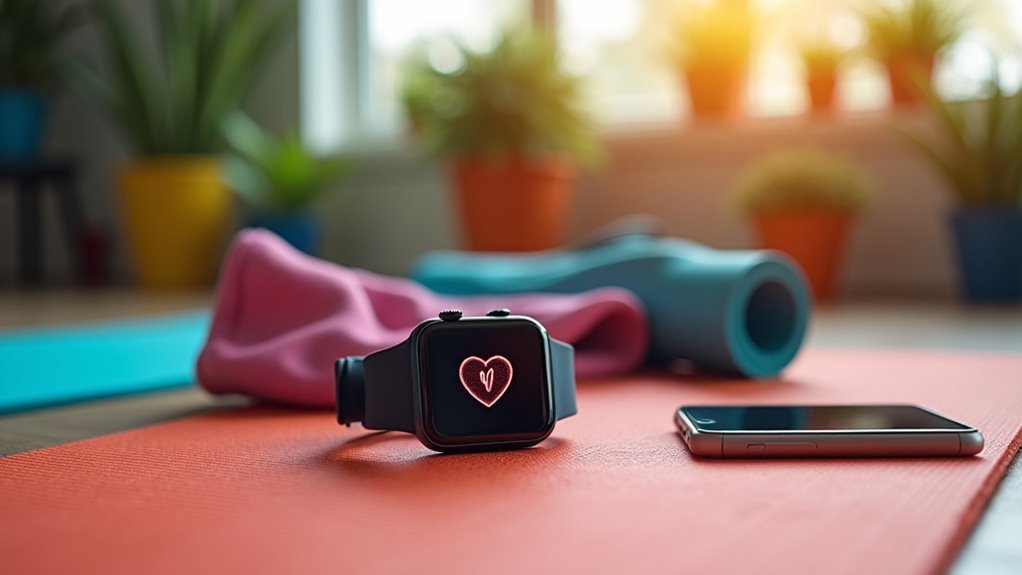
Automated heart rhythm alerts serve as digital guardians that can detect potentially serious conditions like atrial fibrillation before you notice symptoms.
Setting up these alerts requires different approaches depending on your device. For Apple Watch users, open the Apple Watch app on your iPhone, tap My Watch, then Heart, and configure irregular rhythm notifications through the Health app. You can also customize alerts for high or low heart rates based on your specific needs.
Device-specific setup steps ensure your heart rhythm alerts are properly configured for optimal health monitoring and personalized cardiovascular protection.
Fitbit users should navigate to the Assessments section in the Fitbit app and complete the multi-page setup process for irregular heart rhythm notifications.
Remember that not all Fitbit models support this feature, and availability varies by region. These alerts provide immediate notifications, track frequency patterns, and integrate seamlessly with your health data for thorough monitoring. Keep in mind that Low Power Mode will disable heart rate notifications entirely, so ensure your device maintains adequate battery levels for continuous monitoring.
Frequently Asked Questions
How Often Should I Replace My Heart Rate Monitor Chest Strap?
You should replace your chest strap every 1-3 years, depending on usage and care. Replace it sooner if you’re experiencing erratic readings, visible wear, or persistent battery issues that cleaning can’t resolve.
Can I Shower or Swim While Wearing My Heart Rate Monitor?
You can swim or shower with many heart rate monitors, but check your device’s water resistance rating first. Polar OH1+ and BodyGuardian MINI are fully waterproof, while Garmin models aren’t recommended.
What Should I Do if My Heart Rate Monitor Gives Inconsistent Readings?
Check your sensor’s clean and positioned correctly, replace low batteries, guarantee snug fit, and minimize movement interference. If readings remain inconsistent despite proper setup, consider testing with different apps or consulting medical professionals.
How Do I Calibrate My Wearable Device for More Accurate Measurements?
Disable auto-calibration in your device settings, then walk or run a measured distance while wearing it. Use GPS or another device as reference, and recalibrate regularly after firmware updates.
Should I Continue Exercising if My Heart Rate Monitor Battery Dies?
You can safely continue exercising at moderate intensity without your heart rate monitor. Rely on perceived exertion and listen to your body’s signals. Check your pulse manually if needed for guidance.
In Summary
You’ve got powerful tools at your fingertips to monitor your heart health during exercise. Use your target heart rate zones as guidelines, take advantage of your smartwatch’s ECG capabilities, and stay alert for warning signs of irregularities. Set up those automated alerts so you’re protected even when you’re focused on your workout. By implementing these monitoring strategies, you’ll exercise with confidence while keeping your cardiovascular health as the top priority.