
Your smartwatch detects low blood oxygen using pulse oximetry technology with red and infrared LED lights that shine through your skin. The device measures how much light your blood absorbs, since oxygenated and deoxygenated blood absorb different wavelengths differently. Algorithms process this reflected light data to calculate your SpO2 levels continuously throughout the day and night. While these readings provide helpful health trends and can alert you to concerning drops, they’re not medical-grade accurate. Understanding the technology’s capabilities and limitations will help you make the most of this powerful health monitoring tool.
Pulse Oximetry Technology in Wearable Devices
While traditional pulse oximeters require you to clip a device onto your finger for spot measurements, modern wearable technology has revolutionized blood oxygen monitoring by integrating pulse oximetry sensors directly into smartwatches and ring-type devices.
These wearables use the same fundamental principle as clinical devices – measuring light absorption by hemoglobin to determine your SpO2 levels and pulse rate.
Wearable pulse oximeters employ identical light-absorption technology as hospital-grade equipment to accurately measure blood oxygen saturation and heart rate.
You’ll find these sensors seamlessly embedded in devices that monitor your oxygen saturation continuously throughout the day, unlike fingertip models that only provide immediate readings.
The technology connects with mobile apps via Bluetooth, allowing you to track data over time and receive alerts when your oxygen levels drop. Some wearable devices use infrared light to detect color changes, similar to how traditional pulse oximeters estimate blood oxygen saturation.
This continuous monitoring capability makes wearables particularly valuable for detecting concerning changes in your blood oxygen levels.
Light-Based Measurement Methods for SpO2 Detection
The core technology behind smartwatch SpO2 monitoring relies on reflectance pulse oximetry, which differs markedly from the transmissive method used in clinical fingertip devices.
Your smartwatch positions both the light source and detector on the same side of your wrist, measuring reflected rather than transmitted light.
Here’s how the measurement process works:
- Red and infrared LEDs alternate emission to detect oxygen saturation differences in your blood.
- Reflected light data gets processed by algorithms to calculate your SpO2 percentage.
- Comparison of emitted versus reflected light determines hemoglobin oxygen saturation levels.
- Software calibration guarantees reliability of the reported SpO2 values on your display.
This reflectance-based approach enables continuous, non-invasive monitoring during your daily activities. Recent research demonstrates that modern smartwatches can achieve clinical accuracy standards when measuring oxygen saturation levels across various ranges.
Optical Sensors and LED Light Wavelength Analysis
Sophisticated optical sensors form the technological foundation of your smartwatch’s blood oxygen monitoring capabilities. These sensors use specific LED light wavelengths to measure physiological parameters through your skin. Red and infrared light target oxygenated and deoxygenated hemoglobin, enabling accurate blood oxygen readings.
Green light, strongly absorbed by blood, helps measure heart rate through pulse detection. The technology relies on spectral analysis, where different hemoglobin types absorb light at varying rates. Your device’s photodetector captures reflected light, revealing oxygen saturation levels.
Machine learning algorithms interpret this raw sensor data, accounting for factors like skin tone, movement, and ambient light. The complex interaction between your smartwatch, tissue, and environment requires sophisticated processing to deliver reliable measurements you can trust for health monitoring. These non-invasive measurements require only a few minutes of stillness to provide accurate readings.
Algorithm Processing for Blood Oxygen Calculations
Once your smartwatch’s optical sensors capture raw light data, complex algorithms transform these signals into meaningful blood oxygen measurements. The processing begins with your device analyzing photoplethysmogram (PPG) signals derived from red and near-infrared light absorption variations caused by pulsatile arterial blood flow.
Your smartwatch’s algorithm follows these key steps:
- Signal extraction – Isolates pulse waveforms from raw optical data
- AC component determination – Identifies pulsatile variations in blood volume
- Ratio calculation – Compares red and infrared light absorption ratios
- SpO2 conversion – Translates ratios into oxygen saturation percentages
These sophisticated calculations happen continuously on your wrist, filtering out noise from movement and ambient light. This continuous monitoring capability allows users to track their oxygen levels over time, identifying patterns and potential health concerns related to respiratory health.
The algorithm’s precision depends on proper sensor contact and calibration against clinical standards.
FDA Clearance and Clinical Validation Standards
Before your smartwatch can legally claim medical-grade accuracy for blood oxygen monitoring, it must undergo rigorous FDA clearance and clinical validation processes. You’ll need to understand that manufacturers must submit extensive clinical data demonstrating their device’s substantial equivalence to already-cleared predicate devices.
| Validation Requirement | Standard |
|---|---|
| Accuracy Testing | Must meet specific accuracy standards across different skin types |
| Clinical Environment | Testing in hospitals and home care settings |
| Real-time Monitoring | Continuous hypoxemia detection capabilities |
The Masimo W1 Medical Watch exemplifies successful FDA clearance for pulse oximetry. You should know that devices undergo continuous post-market surveillance, and the FDA issues safety alerts for non-compliant devices. This process guarantees your smartwatch meets strict safety and efficacy standards for medical use. These devices can provide spot-checking capabilities for SpO2 and pulse rate measurements in addition to continuous monitoring functions.
Top Smartwatch Models With Spo2 Monitoring
While FDA clearance sets the medical standard, you’ll find several consumer smartwatches that offer impressive SpO2 monitoring capabilities for wellness tracking.
These devices integrate blood oxygen sensors with extensive health ecosystems, providing continuous or on-demand measurements alongside heart rate and sleep data.
Leading models include:
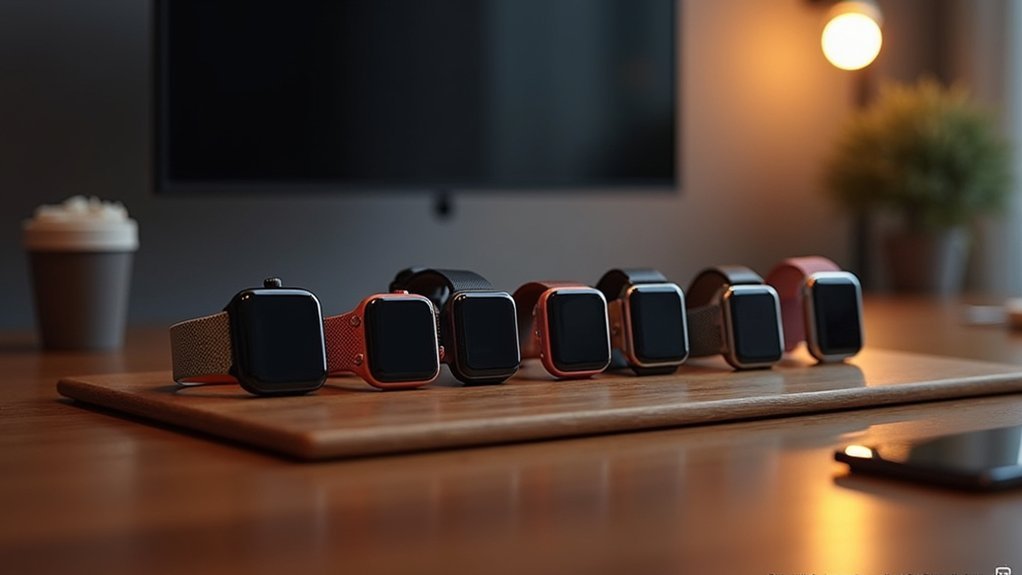
- Apple Watch Series 9/10 – Seamless iPhone integration with SpO2 tracking and health trend analysis
- Samsung Galaxy Watch 6/7 – Robust Android compatibility featuring continuous monitoring and sleep apnea detection
- Google Pixel Watch 3 – Deep Android ecosystem integration with real-time alerts and voice commands
- Garmin Venu 3 – Superior battery life and accurate readings focused on fitness tracking
Most devices position SpO2 as wellness tools rather than medical devices, combining user-friendly interfaces with customizable health insights and notifications. CNET’s testing incorporates rigorous evaluation of comfort and fit across various wrist sizes to ensure optimal sensor performance for blood oxygen monitoring.
Health Applications for Respiratory and Sleep Tracking
Your smartwatch’s SpO2 sensor extends beyond basic oxygen monitoring to track critical respiratory patterns during sleep.
You’ll receive alerts for potential sleep apnea episodes when your breathing stops or becomes irregular throughout the night.
The device continuously monitors your oxygen levels while you sleep, helping identify respiratory health issues that often go undetected during daytime hours. Advanced smartwatches can measure your respiratory rate with remarkable accuracy of over 90% in normal to moderate sleep apnea cases.
Sleep Apnea Detection
Although traditional sleep studies require overnight hospital visits and expensive equipment, smartwatches now offer a convenient first line of defense against undiagnosed sleep apnea.
Your Apple Watch 9, 10, or Ultra 2 can monitor breathing disturbances over 30 days using machine learning algorithms, while Samsung’s Galaxy Watch 7 provides similar detection through their Health Monitor app. With 80% being unaware of their condition, these devices serve as crucial early warning systems.
Here’s how smartwatches detect sleep apnea risk:
- Accelerometer tracking – Monitors your wrist movements during sleep to identify irregular breathing patterns
- Machine learning analysis – Processes 30 days of data to detect breathing disturbances
- FDA-approved alerts – Notifies you of potential risks requiring medical evaluation
- Exportable reports – Shares collected data with your healthcare provider for professional assessment
You can’t receive an official diagnosis, but early detection helps prevent serious complications like heart disease and diabetes.
Respiratory Health Monitoring
Beyond detecting sleep disorders, smartwatches continuously track your respiratory health through blood oxygen monitoring throughout the day.
This SpO2 tracking provides valuable insights into your respiratory efficiency, helping you understand how well your lungs are functioning over time.
When oxygen levels suddenly drop, it may signal breathing problems or respiratory distress that requires attention. You can monitor daily trends to track improvements or declines in your lung function, making it easier to spot potential health issues early.
This continuous monitoring proves especially useful for early detection of respiratory illness symptoms, including COVID-19 or flu. Smartwatches can take background measurements throughout the day, primarily checking SpO2 at rest to provide comprehensive health data.
If your oxygen levels drop unusually low, the data can prompt you to seek medical advice before symptoms worsen, potentially catching respiratory problems in their earliest stages.
Nighttime Oxygen Tracking
Nighttime oxygen tracking through your smartwatch reveals critical health patterns that remain hidden during daytime monitoring. Your device continuously measures SpO2 levels while you sleep, detecting oxygen desaturation events that could signal sleep apnea or respiratory dysfunction. This passive monitoring doesn’t interrupt your sleep cycles while collecting valuable data.
Modern wearables like the Masimo W1 feature FDA-cleared modules that ensure accurate oxygen saturation readings throughout the night. Key benefits of overnight SpO2 tracking include:
- Early Detection – Identifies abnormal oxygen drops before symptoms become apparent
- Pattern Recognition – Reveals trends across different sleep stages and breathing cycles
- Comprehensive Analysis – Combines oxygen data with heart rate variability and movement patterns
- Medical Integration – Provides shareable data for healthcare providers to support diagnosis
Popular devices like Apple Watch, Samsung Galaxy Watch, and Fitbit Sense offer this capability, though only Withings ScanWatch has FDA clearance.
Early Warning Systems for Medical Conditions
Your smartwatch can serve as an early warning system for serious medical conditions by continuously monitoring your blood oxygen levels throughout the day and night.
When you’re sleeping, the device can detect irregular SpO2 patterns that may indicate sleep apnea, alerting you to potentially dangerous breathing interruptions. With sleep apnea affecting 30 million individuals in the U.S. alone, many cases remain undiagnosed until smartwatch monitoring reveals concerning patterns.
During health crises like COVID-19, your smartwatch can also notify you of concerning drops in oxygen saturation that warrant immediate medical attention.
Sleep Apnea Detection
When you’re sleeping peacefully, your breathing might be telling a different story—one that smartwatches are increasingly capable of detecting. Sleep apnea, where breathing stops and starts during sleep, often goes undiagnosed despite its serious health implications. Your smartwatch can’t officially diagnose this condition, but it’s becoming a powerful early warning system.
Modern devices use sophisticated technology to monitor potential sleep apnea signs:
- Accelerometer tracking – Detects irregular wrist movements indicating breathing disruptions
- Blood oxygen monitoring – Identifies drops in oxygen levels during sleep events
- Machine learning algorithms – Analyzes breathing patterns over time for risk assessment
- Snoring detection – Integrates audio monitoring for thorough evaluation
Devices like the Apple Watch 10 have received FDA approval for these features, allowing you to export data for healthcare provider consultation. Understanding that 80% of cases remain undiagnosed makes these smartwatch capabilities particularly valuable for prompting users to seek proper medical evaluation.
COVID-19 Monitoring Alerts
Since the pandemic began, smartwatches have evolved into sophisticated health monitoring tools that can detect early warning signs of COVID-19 and other respiratory conditions.
These devices continuously monitor your blood oxygen saturation levels, alerting you when readings drop below normal ranges that could indicate respiratory distress.
Your smartwatch can serve as an early warning system by tracking heart rate variability and SpO2 patterns that may suggest infection.
When abnormal readings occur, you’ll receive alerts prompting you to seek medical attention.
Some devices integrate with telehealth services and healthcare apps, allowing you to share data directly with your doctor for remote monitoring. Advanced models like the Apple Watch Series 9 provide comprehensive health tracking with high accuracy in SpO2 and ECG measurements for enhanced medical monitoring capabilities.
However, you shouldn’t rely solely on smartwatch readings for diagnosis, as most lack FDA clearance for medical-grade accuracy.
Accuracy Factors and Environmental Limitations
Although smartwatches offer convenient blood oxygen monitoring, several factors can greatly impact their accuracy and reliability. Your device’s sensor technology varies greatly between brands, with some models showing better precision than others.
Environmental and physiological conditions also play vital roles in measurement quality. These devices primarily function to provide general trends rather than precise medical measurements.
Key factors affecting your smartwatch’s SpO2 accuracy include:
- Skin tone variations – Darker pigmentation can reduce sensor effectiveness due to light absorption differences.
- Movement and interference – Physical activity, nail polish, or poor device fit degrades reading quality.
- Environmental conditions – High altitude, cold extremities, and ambient lighting affect sensor performance.
- Technical limitations – Reflective sensors in smartwatches are inherently less accurate than medical-grade transmittance methods.
You should interpret readings as trends rather than precise diagnostic data.
Medical-Grade Alternatives and Professional Consultation
While consumer smartwatches provide valuable health insights, you’ll find significant differences when comparing them to medical-grade alternatives that have earned FDA clearance. The Withings ScanWatch and Masimo W1 stand out with FDA-cleared SpO2 monitoring technology, offering clinically validated readings that medical professionals trust.
FDA-cleared smartwatches like the Withings ScanWatch deliver clinically validated health monitoring that medical professionals actually trust.
These devices deliver superior precision and accuracy compared to typical consumer smartwatches, making them more reliable in critical situations.
However, you’ll face challenges including higher costs and limited accessibility. Additionally, you shouldn’t interpret SpO2 readings without consulting healthcare professionals, regardless of your device type.
Medical experts can provide essential insights into your readings’ significance and help you understand potential health implications. When combined with professional guidance, continuous smartwatch monitoring enhances your overall health management strategy.
Frequently Asked Questions
How Often Should I Calibrate My Smartwatch’s Blood Oxygen Sensor?
You don’t need to calibrate your smartwatch’s blood oxygen sensor at all. Unlike blood pressure features that require monthly recalibration, blood oxygen monitoring doesn’t have specific calibration requirements according to manufacturer guidelines.
Can Smartwatch Blood Oxygen Readings Detect Carbon Monoxide Poisoning?
No, your smartwatch can’t detect carbon monoxide poisoning. Standard pulse oximeters, including smartwatch sensors, misread carbon monoxide as oxygen, showing falsely normal readings. You’d need specialized blood tests for accurate detection.
Do Blood Oxygen Measurements Drain Smartwatch Battery Faster Than Other Features?
Blood oxygen measurements can drain your smartwatch battery considerably faster than many other features. You’ll notice reduced battery life from 20+ days to just 4 days with continuous monitoring enabled.
What Blood Oxygen Level Reading Should Prompt Immediate Medical Attention?
You should seek immediate medical attention if your blood oxygen drops to 90% or below. Don’t ignore readings between 91-94% either—consult your healthcare provider, especially if you’re experiencing breathing difficulties.
Can I Use My Smartwatch Blood Oxygen Monitor While Flying?
You can use your smartwatch’s blood oxygen monitor while flying, but it’s less accurate than finger-based devices and requires staying still for thirty seconds to get reliable readings.
In Summary
You’ll find smartwatches offer convenient blood oxygen monitoring through pulse oximetry technology, but don’t rely solely on their readings for medical decisions. While they’re excellent for tracking trends and providing early warnings, environmental factors can affect accuracy. You should consult healthcare professionals for concerning readings and consider medical-grade devices for precise measurements. These wearables work best as supplementary health tools alongside proper medical care and professional monitoring.


Leave a Reply