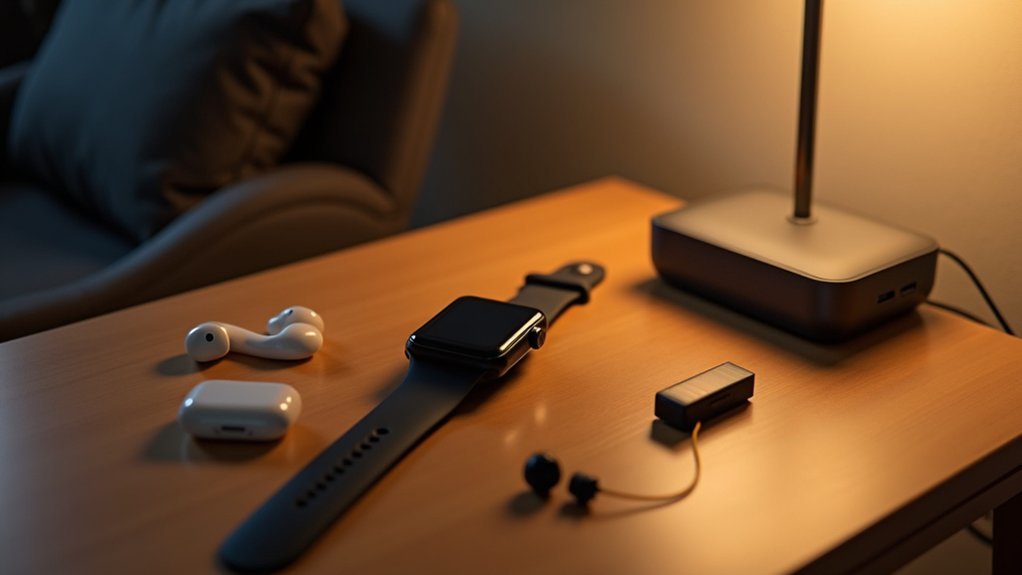
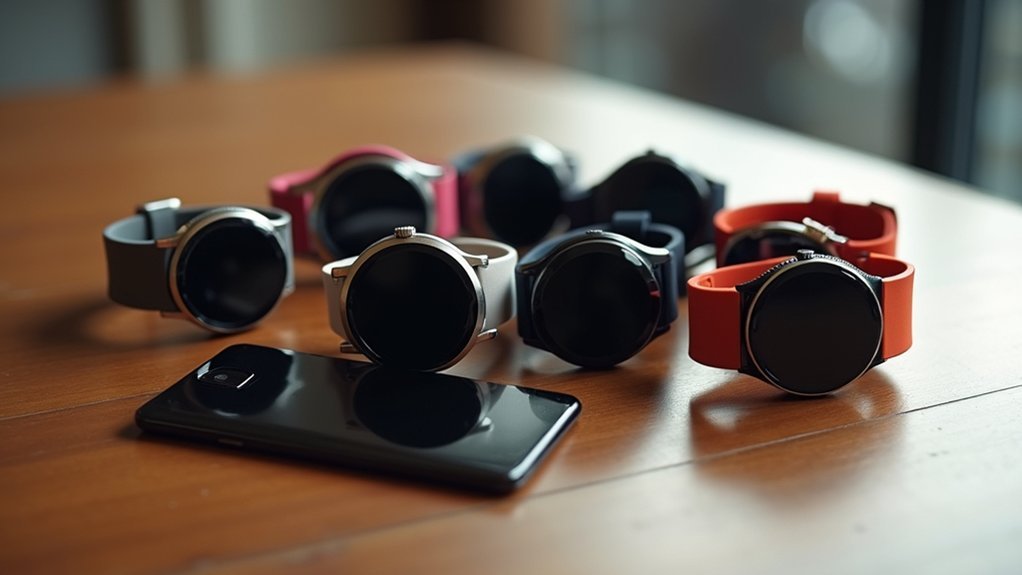
You’ll want to evaluate the Fitvii GT5 Pro Max with its nano-laser blood pressure monitoring and optical heart rate sensor that scans 250 times per minute. The Apple Watch Series 9 offers medical-grade ECG capabilities with real-time arrhythmia detection and emergency notifications to your contacts. The Fitbit Sense 2 features multi-path optical sensors for 24/7 heart tracking and an ECG app that assesses atrial fibrillation. Each device provides clinical-grade data and senior-friendly interfaces to help you discover extensive heart health insights.
Fitvii GT5 Pro Max: Comprehensive Heart Health Monitoring for Seniors
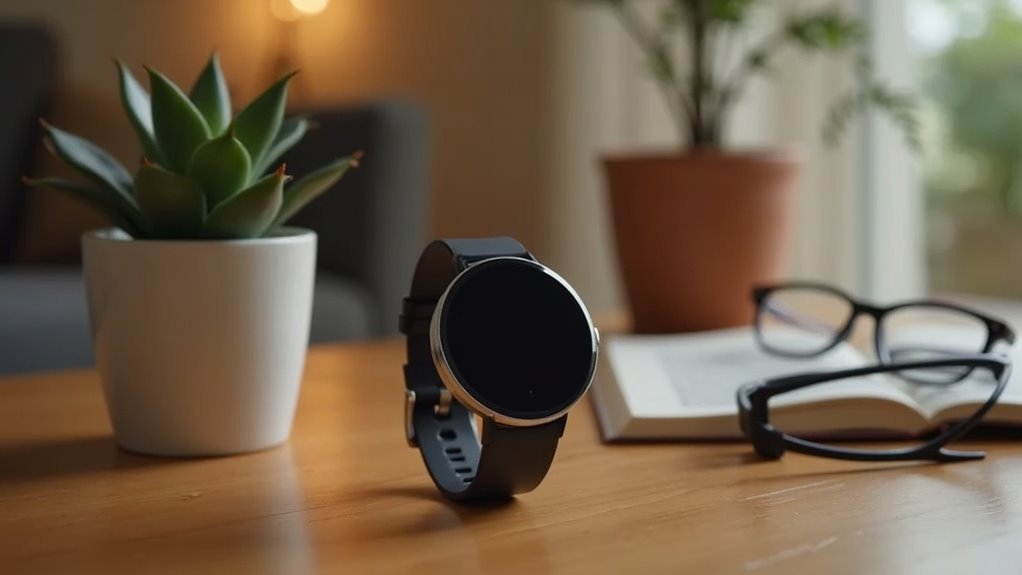
When it comes to thorough heart health monitoring for seniors, the Fitvii GT5 Pro Max stands out with its advanced suite of cardiovascular tracking technologies.
You’ll benefit from nano-laser blood pressure monitoring that continuously tracks your systolic and diastolic readings, providing real-time insights into your cardiovascular health. The optical heart rate sensor scans up to 250 times per minute, guaranteeing accurate readings throughout your day.
The watch features 24/7 ECG measurement that records your heartbeat’s electrical activity, helping detect arrhythmias and potential heart issues.
Continuous ECG monitoring captures your heart’s electrical patterns, enabling early detection of irregular rhythms and cardiovascular concerns.
You’ll also appreciate the blood oxygen sensor using nanometer-level infrared light to monitor your SpO2 levels. The senior-friendly interface offers easy navigation with large fonts and simple menus, while the long battery life guarantees continuous monitoring without frequent charging interruptions. The watch also includes an SOS function that provides emergency assistance when you need it most.
Apple Watch Series 9: Advanced ECG and Arrhythmia Detection Features
Although the Apple Watch Series 9 may seem like a consumer gadget, it delivers medical-grade ECG capabilities that rival professional single-lead electrocardiograms. You’ll get real-time heart rhythm analysis that can detect atrial fibrillation and classify sinus rhythms with impressive accuracy.
The watch doesn’t require a doctor’s prescription, making advanced heart monitoring accessible right from your wrist.
Beyond ECG functionality, you’ll receive automatic alerts for dangerously high or low heart rates, plus emergency notifications sent to your contacts when severe health issues are detected. The device integrates seamlessly with your iPhone and offers intuitive controls perfect for seniors. The watch also includes topographic maps for over 1000 U.S. national and regional parks, making it ideal for seniors who enjoy outdoor activities and hiking.
- Records single-lead ECG readings using electrical heart sensors
- Automatically detects irregular rhythms and atrial fibrillation
- Sends high/low heart rate alerts and emergency notifications
- Features Fall Detection and Crash Detection for thorough safety
- Provides clinical-grade data to discuss with healthcare professionals
Fitbit Sense 2: Multi-Path Heart Monitoring With AFIB Alerts
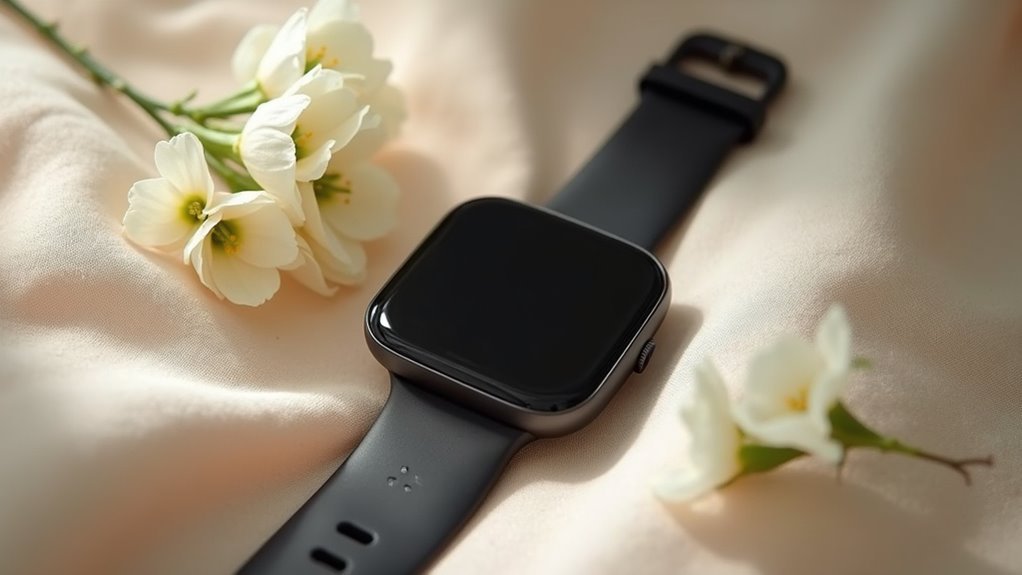
While Apple dominates the smartwatch market, Fitbit’s Sense 2 delivers extensive heart monitoring that’s specifically designed for health-conscious seniors who want continuous cardiovascular insights.
You’ll get multi-path optical sensors that track your heart rate 24/7, plus electrical sensors for on-demand ECG readings. The ECG app specifically assesses your heart rhythm for atrial fibrillation, and you can share these results directly with your doctor.
Beyond AFib detection, you’ll receive high and low heart rate notifications when unusual patterns occur. The device also monitors your stress responses through continuous skin conductance sensors, tracks detailed sleep stages, and measures blood oxygen levels. Unlike the Apple Watch Series 9, the Sense 2 works with both Android and iPhone for broader compatibility.
With over 40 workout options and built-in GPS, it’s thorough health monitoring made accessible.
Frequently Asked Questions
How Accurate Are Smartwatch Blood Pressure Readings Compared to Traditional Cuffs?
Smartwatch blood pressure readings aren’t as accurate as traditional cuffs since they use indirect estimation methods. You’ll need monthly cuff calibration for reliable results, and proper positioning remains essential for accuracy.
Can Heart Monitoring Watches Detect Heart Attacks or Just Irregular Rhythms?
You can’t rely on heart-monitoring watches to directly detect heart attacks. They’ll alert you to irregular rhythms that might indicate underlying issues, but you must recognize heart attack symptoms and seek immediate medical help.
Do These Watches Work Properly for Seniors With Pacemakers or Implants?
You’ll face potential interference issues if you’ve got a pacemaker or implant. These watches can disrupt your device’s function and won’t provide accurate readings. Always consult your cardiologist first.
What’s the Ideal Heart Rate Range for Seniors During Exercise?
You’ll want to target 50-85% of your maximum heart rate during exercise. For a 70-year-old, that’s 75-128 bpm, but consult your doctor since individual needs vary.
How Often Should Seniors Calibrate Their Heart Monitoring Watch for Accuracy?
You should calibrate your heart monitoring watch weekly or whenever readings seem inaccurate. Check manually against your pulse, guarantee proper wrist positioning, and follow your device manufacturer’s specific calibration recommendations for maximum accuracy.
In Summary
You’ve got three excellent options for heart monitoring watches that’ll keep you connected to your cardiovascular health. The Fitvii GT5 Pro Max offers thorough tracking at a budget-friendly price, while Apple’s Series 9 delivers medical-grade ECG technology with seamless smartphone integration. Fitbit’s Sense 2 strikes the perfect balance with reliable AFIB detection and user-friendly design. Choose based on your budget, tech comfort level, and specific health monitoring needs.