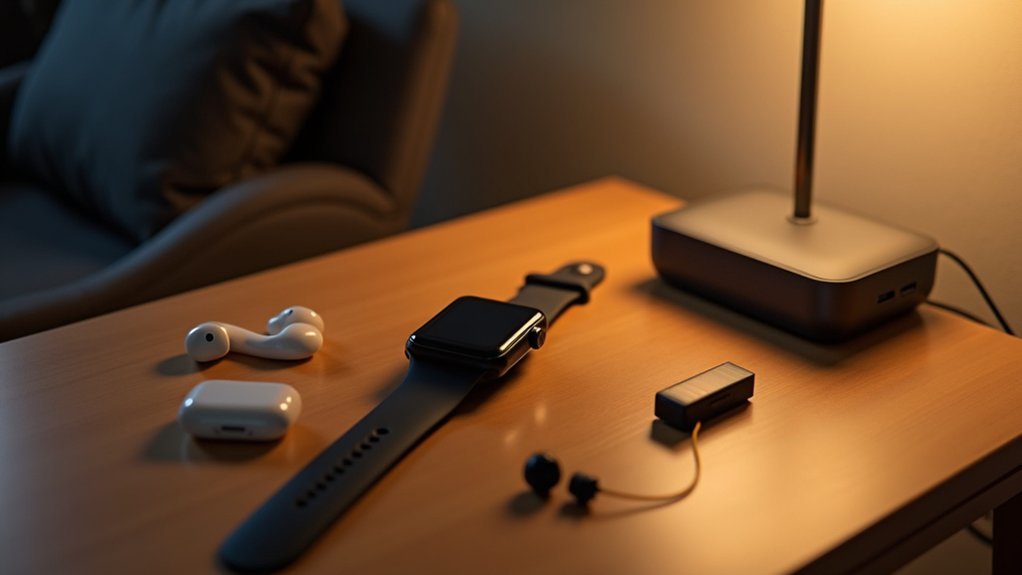
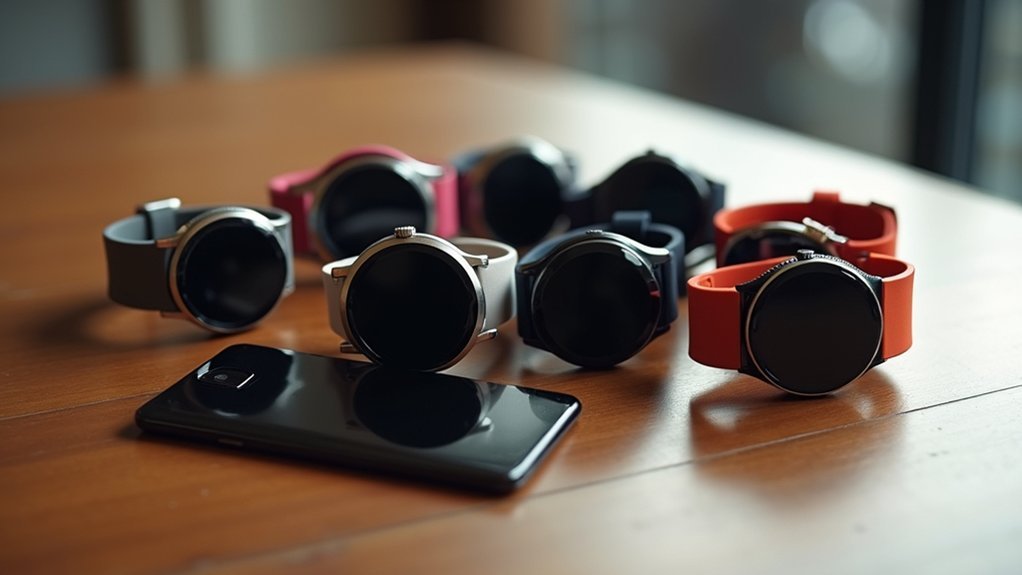
You’ll find the longest battery life in ECG smartwatches from Garmin’s solar-powered models, particularly the Instinct 2X Solar offering up to 40 days of regular use and potentially unlimited runtime with adequate sunlight exposure. The Enduro 3 delivers 36 days standard or 90 days with solar charging. Other solid options include the OnePlus Watch 3 with five-day endurance and Amazfit GTR 4 providing 14 days. We’ll explore how to maximize these impressive runtimes further.
Top ECG Smartwatches With Extended Battery Performance

While most smartwatches struggle to maintain battery life beyond a few days, ECG-enabled models have evolved to offer exceptional endurance that’ll keep your heart monitoring active for weeks or even months.
You’ll find Garmin leading this space with impressive options like the Instinct 2X Solar, delivering up to 40 days of regular use and unlimited battery with solar charging. The Enduro 3 pushes boundaries further with 36 days standard and 90 days solar-powered.
Samsung’s Galaxy Watch Ultra provides solid two-day performance with its 590mAh battery, while OnePlus Watch 3 offers exceptional five-day endurance. The OnePlus Watch 2 features VOOC charging technology that enables the 500mAh battery to reach full capacity in an hour or less.
COROS models like the VERTIX 2S deliver remarkable 40-day battery life, proving ECG functionality doesn’t require constant charging compromises.
Battery Life Comparison Across Leading ECG-Enabled Models
When comparing ECG-enabled smartwatches side by side, the battery performance differences become strikingly apparent across manufacturers and price points.
Garmin dominates the longevity category, with models like the Enduro 3 and fenix 8 delivering 15-40 days under typical conditions. Their solar charging technology extends this even further.
You’ll find Amazfit GTR 4 offers excellent value at 14 days, while Fitbit Sense 2 provides a moderate 6 days of operation.
Samsung Galaxy Watch Ultra and OnePlus Watch 2 fall into the shorter range at 30-36 hours, though Samsung’s model still doubles Apple Watch Series 10’s endurance. The OnePlus Watch 3 significantly improves on its predecessor with 120 hours battery life, making it a compelling option for users seeking extended usage between charges.
Your choice depends on whether you prioritize maximum battery life or prefer more frequent charging with premium features.
Solar-Powered ECG Smartwatches for Maximum Runtime
Solar-powered technology represents the ultimate solution for ECG smartwatch battery concerns, though the reality presents a more complex picture. Currently, you won’t find widely available solar-powered smartwatches that include ECG functionality. The market primarily focuses solar technology on GPS and fitness tracking devices rather than ECG monitoring.
While brands like Seiko Astron excel at solar-powered watches, they don’t incorporate ECG features. You’ll find hybrid alternatives like the Withings ScanWatch, which offers ECG capabilities with extended battery life through efficient design rather than solar power. The Garmin Enduro 3 demonstrates exceptional dual-band GPS performance with solar charging capabilities, achieving up to 90 days of operation.
However, future developments look promising. Advancing solar panel efficiency and growing market demand could drive innovation toward solar-powered ECG smartwatches, potentially offering indefinite runtime with sufficient sunlight exposure.
Balancing ECG Functionality With Power Efficiency
Although ECG functionality adds substantial value to smartwatches, it creates an inherent tension between advanced health monitoring and battery longevity. You’ll find that manufacturers tackle this challenge through efficient chipsets and optimized software designs that activate ECG sensors only when necessary.
| Device Strategy | Battery Impact |
|---|---|
| Continuous ECG monitoring | Drains battery rapidly |
| On-demand ECG readings | Minimal power consumption |
| GPS + ECG usage | Notably reduced runtime |
| Power-saving ECG modes | Extended daily usage |
| Auto-off ECG features | Optimized battery preservation |
Your usage patterns directly influence battery performance. By limiting ECG monitoring to specific intervals and utilizing night mode settings, you can extend runtime greatly. Modern devices like the Apple Watch Series 10 and Samsung Galaxy Watch Ultra demonstrate how efficient processors and smart battery management successfully balance extensive health tracking with practical daily battery life.
Optimizing Battery Life While Using ECG Features

Maximizing your ECG smartwatch’s battery life requires strategic implementation of specific power-saving techniques that don’t compromise health monitoring capabilities.
You’ll want to utilize advanced power management modes that limit unnecessary functions while maintaining ECG accuracy. Keep your ECG sessions shorter to reduce power consumption, allowing more frequent health checks without draining the battery.
Enable sleep mode during extended periods of inactivity and minimize notifications to prevent unnecessary screen activations. Schedule ECG checks during low-usage periods and disable features like GPS when they’re not needed.
Store ECG data locally on your device rather than frequently uploading to the cloud, and analyze data on-device when possible. These strategies help you maintain consistent heart monitoring while extending your smartwatch’s operational time between charges.
Frequently Asked Questions
Are ECG Readings From Smartwatches as Accurate as Medical-Grade Devices?
No, your smartwatch’s ECG readings aren’t as accurate as medical-grade devices. You’ll get basic heart rhythm monitoring, but won’t capture detailed arrhythmia analysis that professional equipment provides for clinical diagnosis.
Can I Share ECG Data From My Smartwatch With My Doctor?
You can share your smartwatch’s ECG data with doctors through health apps like Apple Health or Samsung Health. Most devices export data as PDF or CSV files for easy sharing.
Do ECG Smartwatches Require FDA Approval Before Being Sold?
ECG smartwatches typically need FDA clearance if they’re marketed for medical purposes in the U.S. Apple Watch and Samsung Galaxy Watch have FDA clearance, while some international brands don’t offer ECG features here.
What Health Conditions Can ECG Smartwatches Detect or Monitor?
You can detect atrial fibrillation, arrhythmias, and heart rate variability with ECG smartwatches. They’ll monitor bradyarrhythmias and tachyarrhythmias, helping you identify irregular heartbeats that might indicate stress or underlying heart conditions.
How Much Do Long Battery Life ECG Smartwatches Typically Cost?
You’ll typically spend $400-$1,000 for long battery life ECG smartwatches. Garmin’s Instinct 2X Solar costs $400-$500, while Fenix 8 ranges $700-$1,000+. Premium pricing reflects advanced sensors and extended battery technology.
In Summary
You’ll find that solar-powered models like the Garmin Fenix series offer the longest battery life for ECG monitoring, lasting weeks between charges. However, you’re trading off some advanced features for that extended runtime. If you need extensive health tracking with decent battery life, consider the Apple Watch Ultra or Samsung Galaxy Watch series. Remember, you can greatly extend any ECG smartwatch’s battery by adjusting settings, reducing screen brightness, and limiting continuous monitoring when it’s not essential.