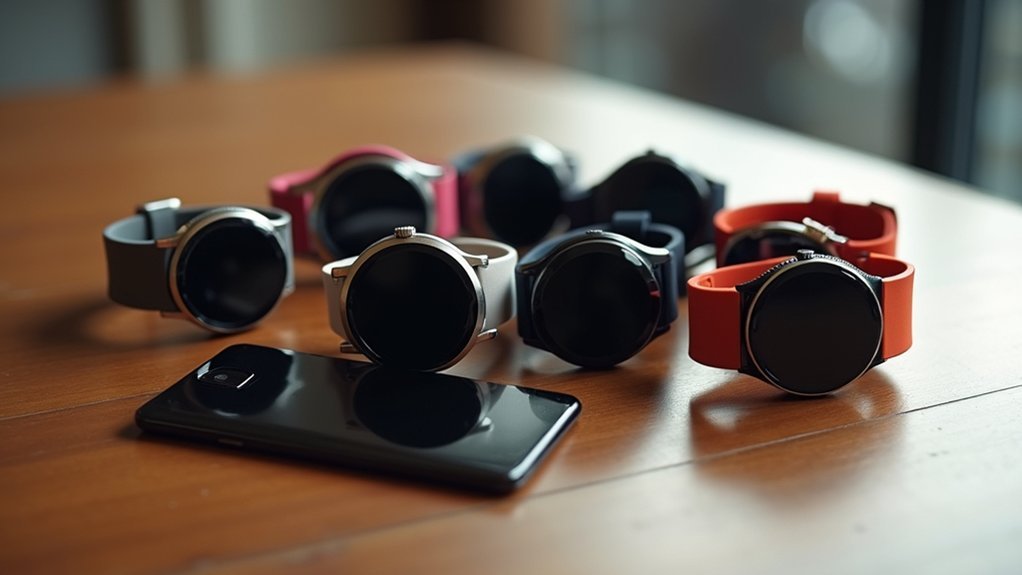
You’ll find significant differences when comparing cycling segments across sport watches, with GPS accuracy varying by 2% between models like Garmin’s Forerunner 965 and Epix 2 depending on terrain. Battery performance ranges dramatically from Apple Watch’s daily charging to Garmin Enduro’s 36-day solar capability. Heart rate precision differs between chest strap connectivity (under 2% accuracy) versus wrist-based sensors, while power meter integration and mapping features separate premium from basic models. Understanding these segment distinctions helps optimize your cycling data quality and training outcomes.
GPS Accuracy and Route Tracking Performance
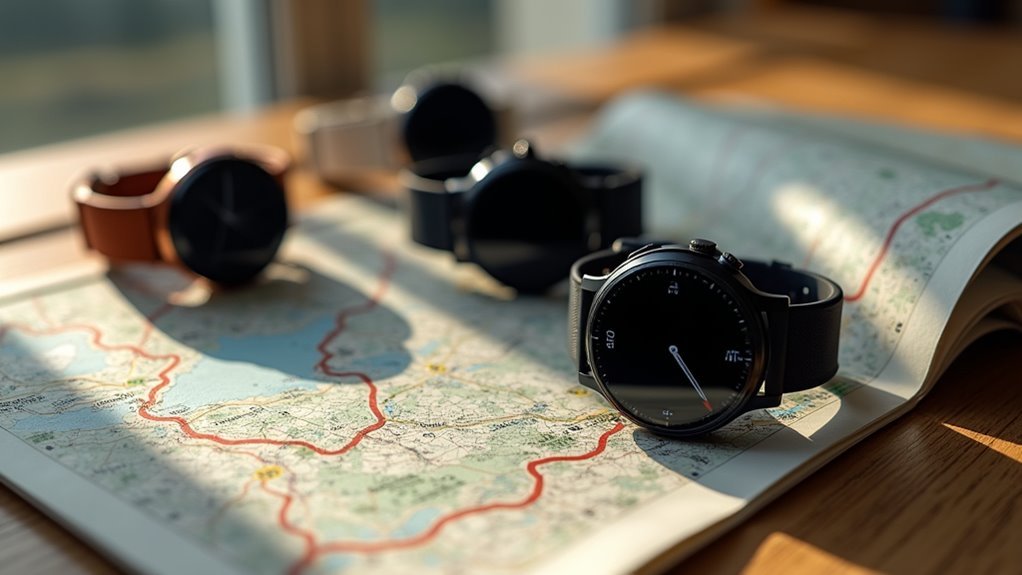
When you’re comparing cycling segments across different sport watches, GPS accuracy becomes the foundation that determines how reliable your performance data will be.
Your watch’s ability to track precise routes depends heavily on multi-GNSS support and recording intervals. You’ll find that Garmin’s Forerunner 965 excels in urban environments, while the Epix 2 delivers robust multi-band GPS performance under tree cover.
Multi-GNSS support and recording intervals determine route precision, with Garmin’s Forerunner 965 and Epix 2 excelling in different environments.
Road rides typically show nearly identical tracks between different devices, but mountain biking can reveal up to 2% discrepancies under dense canopy. You’ll notice environmental obstructions affect wrist-worn devices more than bike computers.
Multi-band GPS technology reduces atmospheric interference, making it essential for consistent segment comparisons across different watches and terrain types. Higher-end models provide breadcrumb-style routing for basic navigation when you need to follow pre-loaded routes on unfamiliar terrain.
Battery Life Comparison Across Cycling Watch Categories
When you’re choosing a cycling watch, you’ll face a fundamental power decision between solar-charged models like the Garmin Enduro series and traditional battery-powered options.
The endurance-focused watches consistently outperform standard sport watches, with models like the Enduro 3 delivering 36 days in smartwatch mode compared to daily charging requirements of devices like the Apple Watch Series 9. Smartwatches with extensive navigation capabilities typically consume more battery power during rides, as advanced models provide turn-by-turn instructions and in-ride rerouting features.
Your actual usage patterns—whether you’re primarily tracking GPS rides or using smartwatch features—will dramatically impact how long your device lasts between charges.
Solar Vs Traditional Power
Battery life represents the most critical differentiator between solar-powered and traditional cycling watches, directly impacting your ride tracking capabilities and overall user experience. Solar-charged models like the Garmin Fēnix 7 deliver up to 5 days of GPS tracking, while the Forerunner 955 Solar provides 49 hours in GPS mode. You’ll find solar charging slows battery discharge during long outdoor rides where sunlight’s abundant.
| Feature | Solar Power | Traditional Power |
|---|---|---|
| GPS Tracking Duration | 49+ hours | 20-30 hours |
| Recharging Frequency | Weekly/Bi-weekly | Every few days |
| Initial Cost | Higher | Lower |
| Long-term Savings | Significant | Minimal |
Traditional watches offer weeks in smartwatch mode but require frequent recharging. While solar models cost more upfront, they’ll save you money through reduced battery replacements and maintenance needs. The solar technology incorporates a 100% solar capability on the outer ring combined with a 7% photovoltaic layer integrated directly into the display for maximum energy collection.
Endurance Series Battery Champions
Three distinct categories define cycling watch battery performance, each serving different rider needs and endurance requirements.
The Garmin Enduro series leads the pack, delivering weeks of battery life that’s perfect for multi-day adventures. You’ll find the Fēnix 7 Pro Sapphire Solar offers an impressive 18-day lifespan with solar charging extending your ride time considerably.
The Forerunner 965 provides advanced multi-sport tracking but lacks solar capabilities. The versatile Forerunner 265 delivers up to 13 days of battery life while balancing budget-friendly pricing with high-end features.
GPS mode dramatically reduces battery life across all models, often requiring mid-ride charging during longer events. Your usage patterns matter most – frequent backlight activation, music playback, and GPS tracking will drain power faster.
Solar charging can add hours or days depending on sunlight exposure, making it invaluable for endurance cyclists tackling extended outdoor adventures.
Usage Impact on Longevity
Understanding how you use your cycling watch directly determines whether it’ll last through your longest rides or leave you stranded mid-route.
Your GPS tracking choices dramatically impact battery performance—dual-band GPS modes cut runtime nearly in half compared to single-band tracking, as COROS APEX 2 Pro demonstrates with its drop from 66 to 24 hours.
You’ll face significant trade-offs between smartwatch features and GPS endurance. The Garmin fenix 8 plummets from 29 days daily use to just 84 hours with GPS active.
If you’re planning multi-day cycling events, you’ll need to balance tracking accuracy with power consumption. The OnePlus Watch 2 achieves exceptional four-day runtime while maintaining comprehensive smart features and health monitoring capabilities.
AMOLED displays drain batteries faster than memory-in-pixel screens, while solar charging can extend certain models like the Garmin Enduro 3 from 120 to 320 hours.
Mapping and Navigation Features for Cyclists
When you’re traversing unknown trails or urban routes, GPS accuracy becomes the difference between reaching your destination and getting lost mid-ride.
You’ll find that multi-band GPS systems in premium cycling watches deliver markedly better positioning than standard single-frequency models, especially in challenging environments like dense forests or urban canyons.
Your ability to plan and modify routes on-the-fly also varies dramatically between basic fitness trackers and dedicated cycling computers, with some watches offering full route creation while others only display pre-loaded tracks. However, cycling watches typically have smaller screens than cycling computers, which may affect navigation readability during your ride.
GPS Accuracy Comparison
As you venture through city streets or tackle winding mountain paths, your sport watch’s GPS accuracy becomes the foundation for reliable navigation and precise route tracking.
The Garmin Fenix 6x Pro delivers highly accurate positioning in urban environments, showing minimal deviation from actual paths despite signal reflection challenges. You’ll find GPS performs better in open fields than wooded or built-up areas where track shifting occurs.
Apple Watch Ultra 2 provides super-accurate GPS across varied terrains, while Garmin’s Forerunner 955 Solar and Epix 2 offer excellent positioning for complex navigation.
Premium cycling watches utilize multi-satellite systems like GPS, GLONASS, and Galileo for enhanced precision. The Forerunner 965 and Coros Pace 3 balance accuracy with power efficiency, ensuring consistent performance regardless of environmental factors. Most tested models maintained accuracy within 1-3% of actual measured distance during challenging canyon environments and varied terrain conditions.
Real-Time Route Planning
While GPS accuracy forms the foundation of cycling navigation, your watch’s real-time route planning capabilities determine whether you’ll confidently explore unfamiliar terrain or find yourself studying tiny breadcrumb trails on a monochrome display.
Higher-end models like the Garmin Epix 2 and Forerunner 955 Solar deliver preloaded maps with full-color touchscreens, enabling easy route following through breadcrumb-style navigation. However, you’ll find limited turn-by-turn prompts compared to dedicated cycling computers.
Multi-band GPS technology improves location accuracy in urban environments, while some devices incorporate elevation data for terrain-aware planning.
Entry-level watches like the Forerunner 255 provide basic GPS tracking but lack advanced mapping features. Solar charging extends battery life during longer rides, and seamless integration with Garmin Connect allows route transfers from your smartphone. The Edge 965 stands out with turn-by-turn navigation and structured workout suggestions specifically designed for cycling performance enhancement.
Heart Rate Monitoring and Health Metrics Integration
Though wrist-based optical sensors offer convenience, they can’t match the accuracy that chest strap monitors deliver for serious cycling training.
You’ll find chest straps achieve error rates below 2% even during mountain biking, while wrist monitors struggle with vibrations from drops and hoods affecting sensor contact.
For serious training, you need 5% accuracy or better, making chest straps your best choice.
However, modern sport watches excel at integrating heart rate data with additional health metrics like HRV, stress levels, and recovery tracking.
Top cycling watches pair wirelessly with chest straps, combining superior accuracy with thorough analysis through companion apps.
You’ll appreciate features like onboard memory, voice commands, and training load tracking that transform raw heart rate data into actionable fitness insights for ideal performance. The ECG sensors in chest straps measure electrical impulses directly from the heart, providing the most reliable data for training zone calculations.
Power Meter Connectivity and Training Data Analysis
Beyond heart rate monitoring, power meters represent the gold standard for cycling performance data, and your sport watch’s ability to connect with these devices determines how effectively you can track training intensity. Most modern sport watches support ANT+ and Bluetooth Smart protocols, ensuring compatibility with various power meters and sensors.
| Feature | Basic Models | Premium Models |
|---|---|---|
| Connectivity | Bluetooth only | ANT+ + Bluetooth |
| Metrics | Real-time watts | TSS, Normalized Power |
| Integration | Limited apps | Full ecosystem |
You’ll receive real-time power output during rides, with high-end watches offering advanced metrics like Training Stress Score and Intensity Factor. Data automatically syncs to companion apps like Garmin Connect or Coros App, plus third-party platforms including Strava and TrainingPeaks for thorough analysis and structured training plans. The dual ANT+/Bluetooth technology ensures seamless connectivity across different sensor brands and training environments.
Solar Charging Technology and Extended Battery Performance
How considerably can solar charging technology extend your cycling adventures without the constant worry of battery depletion?
Solar watches convert light into electrical energy through solar cells, storing power in rechargeable batteries. You’ll achieve best charging efficiency with direct sunlight, though fluorescent light works too.
The Garmin Forerunner 955 Solar delivers up to 20 days in smartwatch mode, while the Enduro 2 Solar offers unbeatable ultra-performance.
Suunto’s Vertical Titanium Solar enhances performance by over 30% with solar charging. G-SHOCK’s Tough Solar technology extends battery life through consistent light exposure.
You’ll benefit from extended ride times, reduced maintenance, and enhanced reliability during long-distance cycling. Solar panels integrate seamlessly with the aesthetic design of modern sport watches without compromising functionality.
Solar charging slows battery discharge, making these watches perfect for multi-day cycling adventures where traditional charging isn’t accessible.
Touchscreen Vs Button Controls for Cycling Usability
When you’re cycling at high speeds or maneuvering challenging terrain, the control interface of your sport watch becomes vital for both functionality and safety.
You’ll find that touchscreens can become less responsive when you’re sweating or riding in wet conditions, potentially forcing you to take your eyes off the road longer than necessary.
Button controls offer immediate tactile feedback and allow you to access essential functions without looking away from your path, making them inherently safer during intense rides. Smartwatches require taking your hand off the handlebars for navigation, creating an additional safety concern during critical riding moments.
Touchscreen Responsiveness While Riding
Where touchscreen interfaces excel in everyday use, they face unique challenges when you’re gripping handlebars and steering through changing road conditions. Your watch’s responsiveness becomes critical when you need quick access to navigation or performance data mid-ride.
Several factors impact touchscreen performance during cycling:
- Weather conditions – Rain and sweat can reduce touch sensitivity, making it harder to register your inputs accurately.
- Glove compatibility – Cycling gloves often interfere with capacitive touch sensors, forcing you to remove them for interaction.
- Vibration interference – Road bumps and bike vibrations can cause accidental touches or prevent deliberate inputs from registering.
You’ll find that touchscreen responsiveness varies considerably between models, with some watches offering better wet-weather performance and glove compatibility than others. Many cyclists prefer watches with button controls as a backup option, since physical buttons remain reliable regardless of weather conditions or glove use.
Button Navigation Safety Benefits
Physical button controls offer a markedly safer alternative for cyclists who need to interact with their watches while maintaining control and awareness.
You’ll maintain better grip stability since buttons require minimal hand movement, unlike touchscreens that demand removing your hands from handlebars entirely. The tactile feedback lets you operate controls without taking your eyes off the road, reducing distraction-related risks.
Button navigation supports muscle memory development, meaning you’ll spend less time looking at your device and more time monitoring traffic and terrain.
Weather conditions won’t compromise functionality – buttons work reliably in rain or cold when gloves make touchscreen operation difficult. The instant feedback and shorter interaction times keep you alert to environmental hazards, while robust button designs better withstand cycling vibrations and impacts. Maintaining constant awareness becomes even more critical when considering that cars passing within close proximity represent the primary safety threat that deters cyclists from riding.
Multisport Tracking Capabilities Beyond Cycling
Although cycling performance remains a primary focus for many athletes, modern sport watches excel at tracking numerous activities beyond the bike.
You’ll find thorough GPS and navigation features with multi-band capabilities that enhance accuracy in challenging environments. These watches offer continuous heart rate monitoring and multiple activity profiles for running, swimming, and hiking.
Key multisport capabilities include:
- Advanced Health Metrics – ECG monitoring, blood oxygen tracking, and skin temperature analysis provide extensive health insights during any activity.
- Extended Battery Performance – Up to 75 hours in GPS mode guarantees you won’t miss data during long adventures.
- Water Sport Ready – 100-meter water resistance and specific open-water swimming profiles make these watches suitable for triathlons and aquatic activities.
You’ll also benefit from offline maps for phone-free navigation. Leading manufacturers provide smartphone apps that deliver detailed data tracking and analysis to enhance your training across all activities.
Size, Weight, and Comfort Factors for Extended Rides
When you’re planning those century rides or multi-day cycling adventures, the physical characteristics of your sport watch become just as important as its tracking capabilities.
Weight matters considerably—lighter models around 1.1-1.9 oz reduce wrist fatigue compared to heavier 2.8 oz options that can feel bulky over time.
You’ll want to evaluate face diameter carefully. Larger 46-47mm displays offer better visibility but increase bulk, while 40-42mm sizes enhance comfort for smaller wrists.
Silicone or rubber straps with breathable designs resist sweat and reduce irritation during long rides.
Look for low-profile cases with rounded edges that won’t catch on clothing or handlebars.
Remember there’s a trade-off: extended battery life models typically weigh more, so balance your power needs against comfort requirements. Some advanced models feature multi-band GNSS technology for enhanced accuracy during challenging terrain rides.
Smart Notification and Ecosystem Integration Features
Beyond the physical attributes that keep you comfortable on long rides, your sport watch’s smart notification and ecosystem integration capabilities determine how seamlessly it fits into your cycling routine and digital life.
A sport watch’s smart features and ecosystem integration define how naturally it becomes part of your cycling lifestyle.
You’ll receive incoming calls, text messages, and email alerts without taking your hands off the handlebars, guaranteeing safety while staying connected.
Modern cycling watches offer three key integration advantages:
- Platform Connectivity – Strava and TrainingPeaks integration provides thorough ride analysis and competitive features
- Smartphone Synchronization – Four-way communication enables music control, GPS data sharing, and notification screening
- Cross-Device Compatibility – Cloud storage and multi-platform apps guarantee your data’s accessible across all devices
For eBike riders, advanced watches can monitor over 100 parameters in real-time, providing comprehensive tracking of battery status, assistance levels, and performance metrics through digital connectivity platforms.
ANT+ technology and companion apps further enhance functionality, while customizable alerts let you choose which notifications matter most during rides.
Advanced Cycling Metrics and Performance Analytics
Three distinct categories of advanced cycling metrics transform your sport watch into a thorough performance analysis tool that rivals dedicated cycling computers.
GPS tracking delivers independent ride monitoring without your phone, while barometric altimeters enhance altitude accuracy beyond standard GPS data. You’ll access route navigation through breadcrumb-style routing and Komoot integration on higher-end models.
Performance analytics provide data interpretation that cycling demands, with wrist-based heart rate monitoring offering fitness insights.
Training readiness scores help you tailor workouts, while heart rate variability tracking reveals recovery and stress levels. Your watch monitors sleep patterns and delivers detailed recovery metrics.
Premium features include turn-by-turn navigation, multi-band GPS for challenging environments, and solar charging capabilities.
Models like the Garmin Forerunner 255 support multi-sport activities, making them versatile training companions.
Weather Resistance and Durability in Cycling Conditions
Cycling conditions put sport watches through rigorous tests that separate reliable performers from fair-weather companions.
You’ll find that models like the Garmin Instinct 2X Solar and Coros Vertix 2 excel in extreme environments through careful material selection and engineering. These watches use titanium and stainless steel construction with sealed cases that protect against moisture and dust penetration.
Key durability features you should prioritize include:
- IPX7 or higher water resistance ratings – ensuring your watch survives heavy rain and stream crossings
- Military-standard shock resistance – protecting against vibrations and impacts from rough terrain
- Gaskets and seals – preventing dust infiltration during off-road adventures
The Casio G-SHOCK series demonstrates exceptional shock resistance, while proper certification standards guarantee your investment withstands cycling’s demanding conditions year-round. Cyclists especially value watches that provide instant legibility for quick time checks during rides without compromising safety or performance.
Price Point Analysis Across Different User Segments
Four distinct price segments dominate the cycling sport watch market, each targeting specific user needs and budgets.
If you’re starting your cycling journey, entry-level options ($50-$500) from Casio G-Shock, Timex, and Seiko provide basic tracking like speed and distance with reliable durability.
You’ll find the sweet spot in mid-tier watches ($500-$3,000) featuring brands like Tissot, Oris, and Hamilton, offering advanced GPS navigation and extensive cycling metrics without luxury pricing.
For premium experiences, luxury segments ($3,000+) deliver superior precision and exclusivity through brands like Grand Seiko.
Smartwatches follow similar patterns: under $100 for basics, $100-$300 commanding largest market share, and $300+ providing professional-grade features for serious cyclists. The expanding market reflects growing awareness and participation in fitness among both genders, driving innovation across all price points.
Frequently Asked Questions
Which Cycling Watch Brands Offer the Best Warranty and Customer Service Support?
You’ll find Polar and Breitling offer the longest warranties at two years, while Garmin provides extensive multi-channel customer support. Wahoo offers extended protection options, making these three your best choices for warranty coverage.
How Do Cycling Watches Perform With Third-Party Cycling Apps Like Strava or Trainingpeaks?
You’ll find Garmin and Wahoo watches sync directly with TrainingPeaks and Strava effortlessly. Apple Watch requires third-party apps like HealthFit for integration. Polar and Suunto also connect well with TrainingPeaks for thorough data management.
Can Cycling Watches Track Indoor Cycling Classes or Spin Bike Workouts Accurately?
You’ll find cycling watches track indoor cycling classes reasonably well using heart rate monitoring and specific workout modes, but they can’t accurately measure distance or speed without external sensors like cadence or speed monitors.
What Data Transfer Options Exist for Sharing Cycling Data With Coaches?
You can share cycling data through cloud syncing with TrainingPeaks or Strava, Bluetooth transfers to smartphones, API integrations between apps, email file sharing, or direct uploads to coaching platforms for analysis.
How Often Do Cycling Watch Manufacturers Release Firmware Updates and New Features?
You’ll find most cycling watch manufacturers release firmware updates every few months. COROS, Garmin, and Polar typically follow quarterly schedules, while Wear OS watches get major updates annually with smaller incremental improvements throughout the year.
In Summary
You’ll find that choosing the right cycling watch depends on your specific needs and budget. If you’re a casual rider, prioritize battery life and basic GPS tracking. Serious cyclists should invest in models with power meter connectivity and advanced analytics. Don’t overlook durability and weather resistance for outdoor training. Consider your smartphone ecosystem for seamless integration. Match features to your cycling goals rather than chasing the most expensive option available.