Your kids share fitness goals on smartwatches because these devices turn exercise into an exciting social game that rewards them instantly. Step counts, sleep scores, and heart rate milestones become conversation starters with friends and family, while virtual badges and leaderboards make progress feel like winning. The competitive elements create accountability through peer groups, and real-time feedback offers immediate gratification that motivates celebration. Discover how this technology strengthens family bonds while building healthier habits.
The Growing Market for Children’s Fitness Tracking Technology
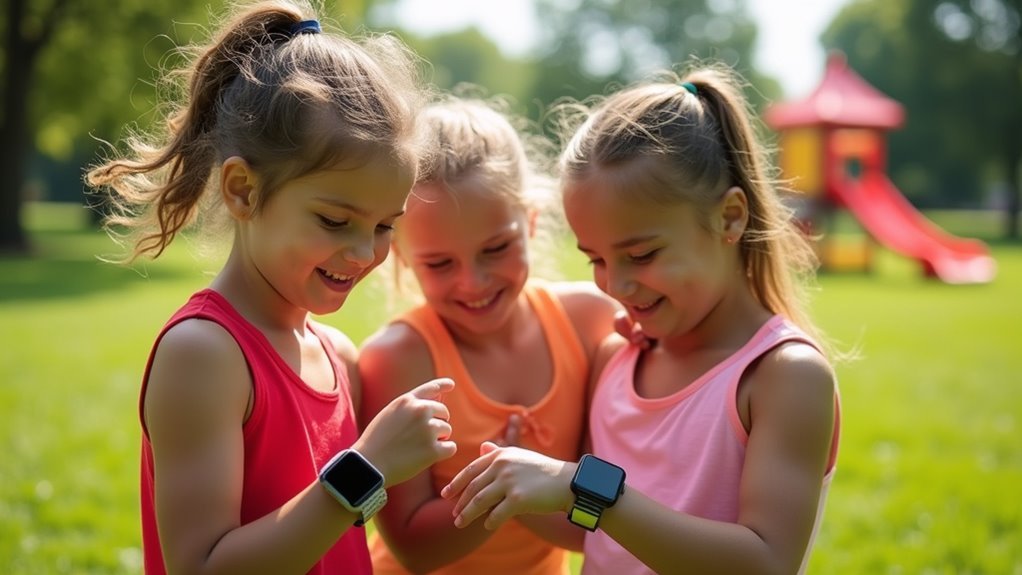
As parents increasingly prioritize their children’s health and wellness, the market for kids’ fitness tracking technology has exploded into a multi-billion dollar industry.
You’re witnessing unprecedented growth, with the global child health wearables market projected to surge from $2.1 billion in 2023 to $7.5 billion by 2032. The US kids smartwatch market alone is expected to reach $8.08 billion by 2034, growing at 14.9% annually.
The child health wearables market is exploding, with projections showing explosive growth from $2.1 billion to $7.5 billion by 2032.
You’ll find that fitness and wellness applications dominate this space, capturing the largest market share in 2024. Key features like GPS tracking and call notifications are particularly attractive to parents seeking comprehensive monitoring solutions for their children.
Rising safety concerns, technological advancements in AI and IoT integration, and the growing prevalence of chronic diseases among children are driving this explosive demand for health monitoring devices that help kids stay active and engaged.
Key Health Metrics That Motivate Kids to Share Progress
When your child hits their daily step count goal, they’ll naturally want to show off that achievement badge to friends and family.
You’ll notice they’re equally excited to share their sleep quality scores, especially when the smartwatch congratulates them for getting a full night’s rest.
Heart rate milestones during active play become instant conversation starters, as kids love explaining how their watch detected their excitement during soccer practice or playground adventures. The competitive element with friends makes tracking progress feel like an exciting game rather than a chore.
Step Count Achievements
Step counts serve as the most accessible entry point for kids discovering fitness tracking because they transform abstract concepts of physical activity into concrete, measurable numbers. Your child can easily understand that 7,000 steps represents a successful day, making fitness goals tangible rather than vague.
These devices gamify movement through achievement badges and daily challenges that turn exercise into an engaging experience. When your child hits their step target, they’ll often share this success with friends and family, seeking recognition for their accomplishment. The visual feedback creates immediate satisfaction – watching numbers climb throughout the day reinforces positive behavior.
You’ll find step tracking builds lifelong habits by breaking large fitness objectives into manageable daily milestones. This approach helps children develop consistency while celebrating small victories that accumulate into significant health improvements. Fitness smartwatches provide interactive games that make physical activity feel less like exercise and more like play, encouraging kids to move naturally throughout their day.
Sleep Quality Tracking
Sleep quality tracking transforms bedtime routines from battles into collaborative health adventures that kids genuinely want to share with others.
When your child monitors sleep duration, stages, and efficiency scores on their smartwatch, they’re gaining valuable insights that make them feel empowered about their health decisions.
These devices track light, deep, and REM sleep phases while providing easy-to-understand visualizations that help kids identify patterns.
You’ll notice your child becomes more engaged in conversations about sleep when they can share concrete data showing their progress.
The real-time monitoring and intuitive interfaces encourage kids to establish consistent wake-up times and improve their sleep routines. These trackers may overestimate sleep time since they can detect when kids fall asleep but sometimes struggle to identify brief wake periods during the night.
When they see how quality sleep enhances their physical performance and concentration at school, sharing these achievements becomes a source of personal pride and motivation.
Heart Rate Milestones
Heart rate milestones create exciting opportunities for kids to track their cardiovascular fitness progress and share meaningful health achievements with friends and family. Your child’s smartwatch transforms health data into tangible goals they’ll want to celebrate and discuss.
| Age Group | Resting HR Range | Max HR Target | Milestone Focus |
|---|---|---|---|
| 8-10 years | 70-110 bpm | 210-212 bpm | Building base fitness |
| 11-13 years | 60-105 bpm | 207-209 bpm | Endurance development |
| 14-15 years | 60-100 bpm | 205-206 bpm | Performance tracking |
| 16-17 years | 60-100 bpm | 203-204 bpm | Adult-level goals |
When your child reaches their target heart rate during exercise or notices their resting rate improving over time, they’re witnessing real fitness progress. These achievements become conversation starters that encourage continued healthy habits and inspire others. Children typically self-regulate during physical activity, making smartwatch data a helpful complement to their natural ability to gauge exertion levels.
Social Reinforcement and Family Bonding Through Shared Goals
When your family creates shared fitness challenges on smartwatches, you’ll notice how competition naturally builds motivation as everyone works toward common step counts or activity goals.
Your child’s peer groups become powerful drivers of participation, with kids pushing each other to earn badges and climb leaderboards together.
These shared achievements don’t just track progress—they strengthen family bonds and friendships through collective celebration of health milestones. Families can also monitor calories burned together, providing insight into overall activity levels that goes beyond simply counting steps.
Family Competition Builds Motivation
Since family members wield the strongest influence on exercise behavior, transforming fitness into a family competition creates a powerful catalyst for motivation that extends far beyond individual goals.
When you introduce competitive elements through your smartwatch challenges, you’re tapping into fundamental drivers that keep everyone engaged.
Family competition leverages several motivational mechanisms:
- Structured accountability – Fear of letting the team down creates consistent participation
- Performance targets – Clear goals drive measurable improvement and results
- External motivation – Competition supplements your child’s internal drive with exciting challenges
- Scheduled training – Competitive activities naturally create structured exercise routines
You’ll find that competitive family fitness challenges on smartwatches provide the external push needed when internal motivation wavers, creating sustainable long-term commitment to healthy habits. Research shows that competitive frameworks lead to 90% higher attendance rates in exercise programs compared to groups without competitive elements.
Peer Groups Drive Participation
Beyond the powerful influence of family competition, your child’s peer groups create an equally compelling force for sustained fitness engagement through smartwatch challenges.
When your kid shares fitness goals with friends, they tap into natural competitive instincts that drive consistent participation. Smartwatches enable real-time progress comparison, turning daily activity into exciting social experiences.
Your child’s motivation increases considerably when they see classmates achieving milestones or competing in fitness games. These devices create virtual communities where kids earn badges together, celebrate achievements, and support each other’s progress.
The social reinforcement builds self-esteem while maintaining active lifestyles. Regular physical activity through these shared challenges helps reduce anxiety and creates positive emotional benefits for your child’s overall well-being. Peer engagement transforms solitary exercise into collaborative adventures.
Your child won’t just track steps—they’ll actively pursue goals knowing friends are watching, encouraging, and participating alongside them in meaningful fitness journeys.
Shared Achievements Strengthen Bonds
Through shared fitness achievements on smartwatches, your family discovers powerful new ways to connect and celebrate together.
When you share activity data with household members, you’re creating collective accomplishments that strengthen relationships naturally. Partner apps let you view and compare progress, fostering teamwork toward common goals.
Your family’s engagement increases considerably when everyone participates:
- Step-count leaderboards encourage friendly competition between siblings and parents
- Real-time tracking allows immediate celebration of each other’s victories
- Collaborative challenges create shared experiences that bond family members
- Achievement visibility builds accountability and reduces dropout rates
Studies show families using digital fitness sharing see measurable improvements in group motivation. This social support can enhance accountability among users, influencing engagement levels significantly.
When your child’s progress gets recognized through these platforms, they experience increased feelings of accomplishment and sustained participation in healthy behaviors.
Gamification Elements That Drive Engagement and Sharing
When your child straps on a smartwatch, they’re entering a world where fitness transforms into an engaging game filled with challenges, rewards, and social connections.
These devices leverage powerful gamification elements that naturally drive kids to share their achievements. Your child earns virtual badges and points for completing activities, creating tangible proof of their efforts they’re excited to show friends and family.
Leaderboards tap into their competitive nature, encouraging them to share progress while climbing rankings. Personalized goals make achievements feel meaningful and worth broadcasting.
Real-time feedback provides instant gratification that kids want to celebrate immediately. The AI technology learns from their activity patterns to recommend increasingly personalized fitness challenges that feel perfectly tailored to their abilities. The combination of challenges, rewards, and social recognition creates an irresistible urge to share, turning individual fitness into a community experience that strengthens relationships.
Building Healthy Habits Through Peer Competition and Recognition
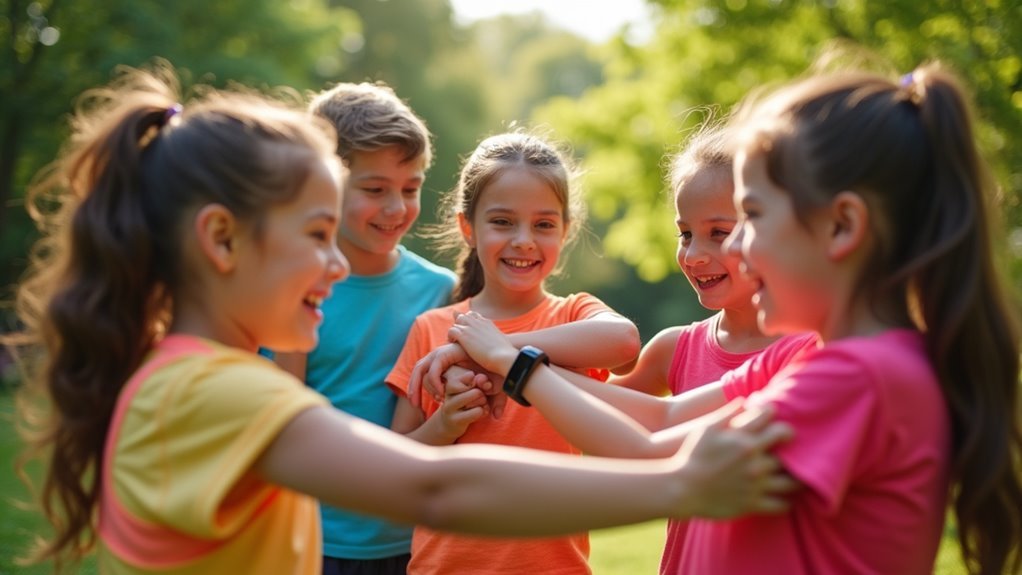
While gamification draws kids into fitness tracking, the real magic happens when their smartwatch connects them to peers who share similar goals.
You’ll notice your child becomes more motivated when they can compare step counts and earn digital badges alongside friends. This peer competition often pushes kids beyond recommended daily activity levels.
However, you’ll want to establish healthy boundaries:
- Set effort-based goals rather than focusing solely on winning metrics
- Monitor for anxiety or extreme behaviors related to competition pressure
- Encourage celebration of others’ achievements, not just personal wins
- Balance competition with individual progress recognition
The key is fostering environments where your child feels motivated by peers without experiencing unhealthy pressure or adopting extreme behaviors to outpace others. These social features are particularly appealing to the 6 to 12 age range that represents the primary smartwatch market.
Overcoming Challenges in Children’s Fitness Tracker Adoption
Despite the growing popularity of children’s fitness trackers, you’ll likely encounter several hurdles when introducing these devices to your family.
Technical issues like poor data syncing, short battery life, and durability concerns can frustrate active kids. You’ll also face accuracy limitations since these devices aren’t medical-grade equipment.
Your child might lose interest quickly without personalized goals and engaging feedback. Short-term use under six months typically fails to create lasting behavior changes, so you’ll need commitment to longer programs incorporating behavioral theory.
Privacy concerns about hacking and data breaches may worry you, especially regarding location tracking and unauthorized access. The market’s rapid expansion, with projections reaching $28.3 Billion by 2030, reflects both growing demand and ongoing security improvements in these devices.
However, you can overcome these challenges through proper training, choosing secure devices, and selecting age-appropriate programs that sustain your child’s motivation beyond initial excitement.
Privacy Considerations for Kids’ Health Data Sharing
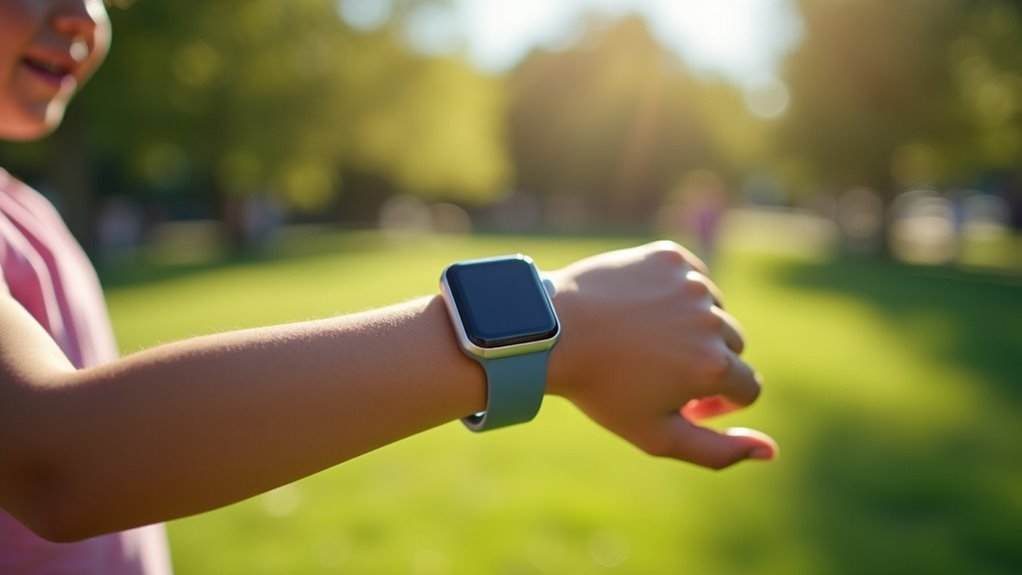
Although fitness trackers can motivate your child to stay active, they’re also collecting sensitive personal data that deserves your careful attention.
These devices gather location information, health metrics, and communication logs that could expose your child to serious privacy risks.
You should understand these key security vulnerabilities:
- Weak encryption – Many smartwatches transmit data without proper protection, making it accessible to hackers.
- Poor authentication – Inadequate password requirements create easy entry points for unauthorized access.
- Hidden malware – Some devices contain modules that secretly install unwanted apps.
- Predator exposure – Internet connectivity can expose children to online threats and inappropriate content.
Before purchasing any fitness tracker, review the manufacturer’s privacy policies, guarantee strong password protection, limit internet access, and regularly monitor your child’s device activity. Reputable brands typically implement stronger privacy protections and comply with stricter data security standards for children’s devices.
Frequently Asked Questions
At What Age Should Children Start Using Fitness Tracking Smartwatches?
You should start your child with fitness tracking smartwatches around age 8-13. You’ll want to guarantee they can understand and use the device independently while you provide necessary parental guidance for safe, effective use.
How Do Fitness Goals Differ Between Boys and Girls on Smartwatches?
You’ll notice boys typically prefer competitive, high-intensity activities and respond to challenges and rewards, while girls often gravitate toward team sports, dance, and are motivated by social connections and community aspects.
Can Smartwatch Fitness Tracking Replace Traditional Physical Education Programs in Schools?
You can’t replace traditional PE programs with smartwatch tracking alone. While you’ll get personalized feedback and motivation, you’d miss vital social interaction, teamwork skills, and structured learning that traditional programs provide.
What Happens When Children Become Obsessed With Meeting Daily Fitness Targets?
When you become obsessed with daily fitness targets, you’ll experience increased anxiety and stress. You’ll fixate on numbers, feel distracted from school activities, and potentially develop device addiction that undermines your overall well-being.
How Do Parents Set Appropriate Fitness Goals Without Creating Pressure?
You’ll set appropriate fitness goals by choosing activities your child enjoys, using SMART goal frameworks with realistic timelines, celebrating effort over outcomes, and involving the whole family in supportive, fun experiences together.